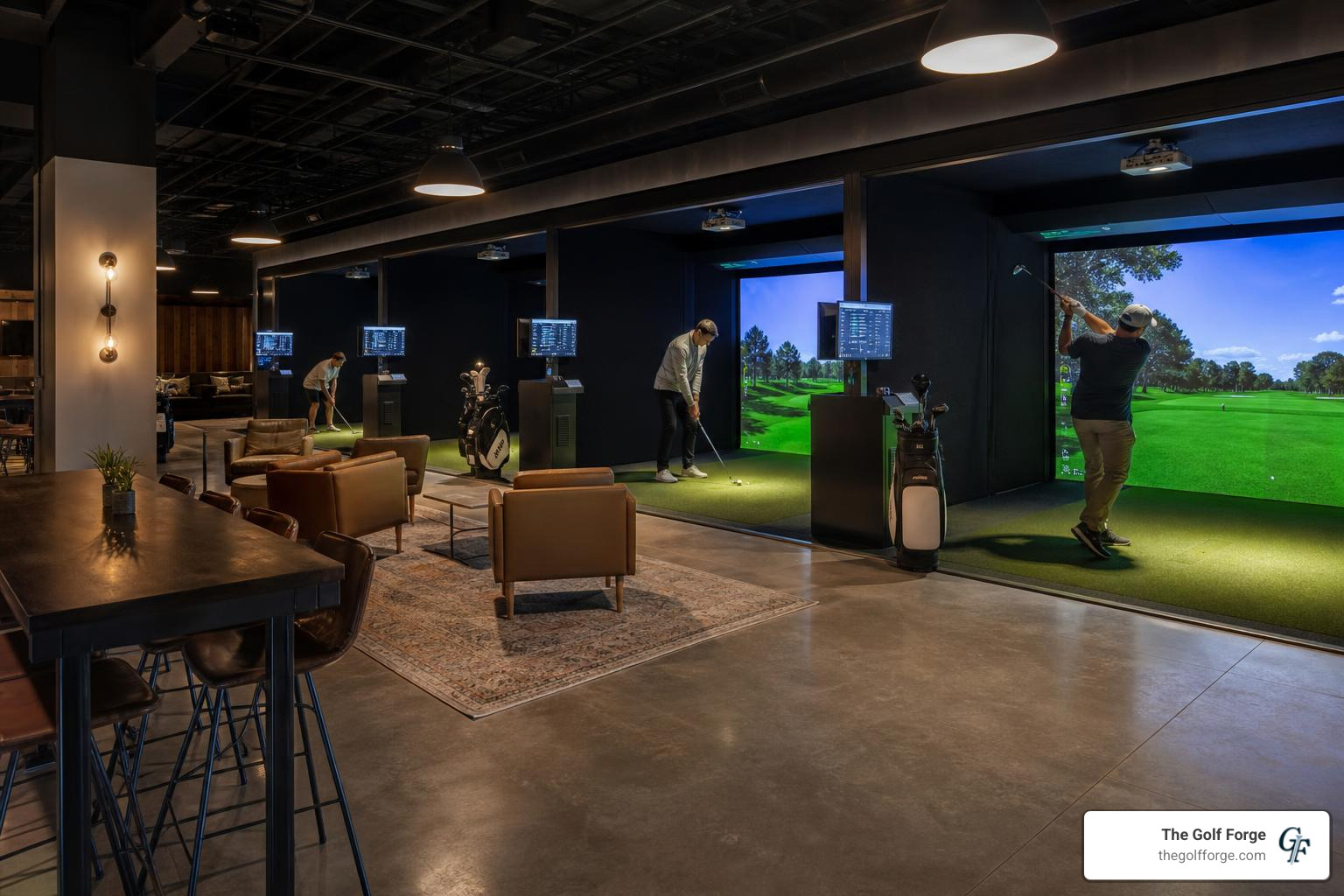
Building a Successful Commercial Golf Simulator Business from Scratch
The Indoor Golf Boom: Why a Commercial Golf Simulator Business Is One of the Smartest Ventures Right Now
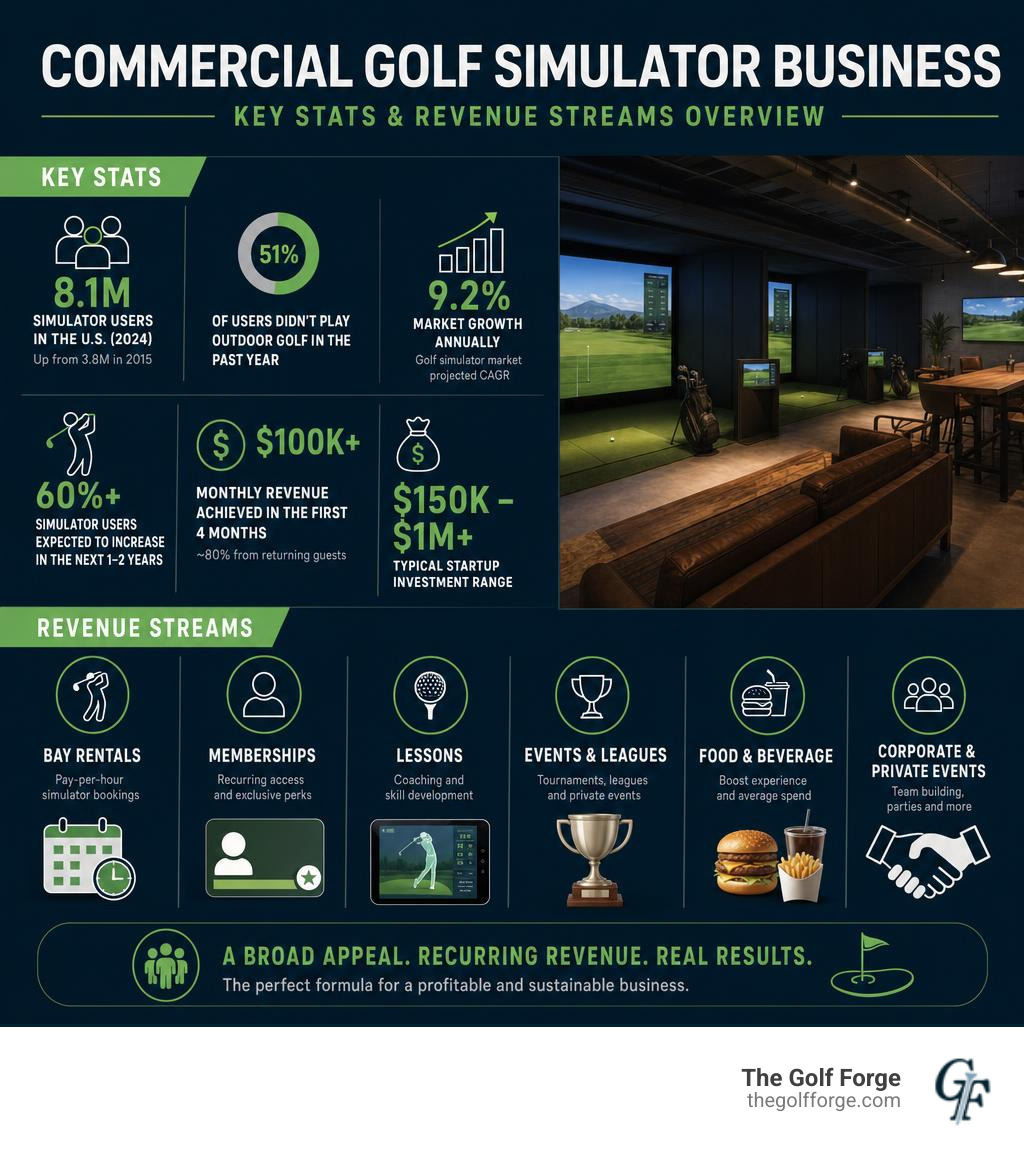
A commercial golf simulator business is one of the fastest-growing opportunities in sports and entertainment — and the numbers back it up.
Quick facts for anyone considering starting one:
What it is: An indoor facility where customers rent simulator bays to play virtual golf courses, practice their swing, or compete in leagues
Who it's for: Golfers, beginners, families, corporate groups, and even non-golfers looking for a social experience
Startup costs: Typically $150,000 to $1,000,000+ depending on size, location, and concept
Revenue streams: Bay rentals, memberships, lessons, events, food and beverage, leagues
Market growth: The golf simulator market is projected to grow 9.2% annually, with simulator users expected to increase by over 60% in the next one to two years
The indoor golf industry has quietly transformed into something much bigger than a rainy-day alternative to the course.
Between 2015 and 2024, the number of simulator users in the U.S. grew from 3.8 million to 8.1 million. Perhaps most surprising? 51% of those users didn't play a single round of outdoor golf in the past year. They're showing up for the experience — the technology, the social atmosphere, and the convenience.
That shift matters enormously for anyone planning a simulator business. Your customer base is broader than you might think.
Real-world results reflect this momentum. One indoor golf facility averaged over $100,000 per month in revenue during its first four months of operation, with roughly 80% of that traffic coming from returning guests. That kind of retention doesn't happen by accident — it's the product of smart design, the right technology, and a business model built around community.
But here's the honest truth: the equipment is the easy part. The businesses that struggle are the ones that focus on buying the best simulator and forget to build a sustainable model around it. The ones that thrive treat the simulator as the draw and recurring revenue as the foundation.
This guide walks you through everything — from choosing your business model and facility setup to pricing, operations, and long-term profitability.
Choosing the Right Commercial Golf Simulator Business Model
When planning your commercial golf simulator business, the first and most critical decision is choosing your operational model. How you structure your space determines your startup costs, staffing needs, real estate requirements, and ultimate profit margins.
In the indoor golf market, we generally see three primary models:
The Entertainment Lounge (Hybrid Food & Beverage): High energy, social focus, and large footprints. These venues pair simulator bays with full bars, premium dining, and party spaces. While they boast high revenue potential, they also carry steep overhead, complex staffing, and intense regulatory requirements (especially for liquor licensing in Utah).
The Training Academy / Performance Lab: Focused on serious golfers, game improvement, and data. These facilities prioritize ultra-accurate launch monitors, PGA-certified instruction, club fitting, and structured practice. They require less square footage and have lower food-and-beverage overhead, but depend heavily on building a dedicated local golfing community.
The 24/7 Unattended/Semi-Automated Club: A modern, lean model utilizing keyless entry, booking software, and automated facility management. This allows members to access private bays at any hour, drastically reducing labor costs while maximizing utility.
To help you visualize how these models stack up, we have broken down the typical financials and requirements below:
Feature/Metric Entertainment Lounge Training Academy 24/7 Automated Club Average Startup Cost $500,000 - $1,200,000+ $150,000 - $400,000 $100,000 - $250,000 Typical Square Footage 5,000 - 15,000+ sq. ft. 2,000 - 4,000 sq. ft. 1,500 - 3,000 sq. ft. Primary Revenue Driver Hourly rentals & F&B Lessons, fittings, & practice Monthly recurring memberships Staffing Requirements High (bartenders, kitchen, hosts) Medium (instructors, desk staff) Extremely Low (automated access) Revenue Potential High ($80k - $150k+/month) Moderate ($30k - $60k/month) Highly Consistent ($20k - $45k/month)
Choosing the right model depends on your local market, available capital, and personal risk tolerance. If you want to dive deeper into planning, you can read these Tips to Start and Grow a Golf Simulator Business - Carl's Place to map out your initial business plan.
The Entertainment-Focused Commercial Golf Simulator Business
The entertainment-focused model is designed to capture the "experiential retail" crowd. It is less about shaving two strokes off a handicap and more about having a great night out with friends.
To succeed here, the environment must feel premium and inclusive. This means open floor plans that encourage social interaction rather than heavily sectioned, dark bays. Many successful modern lounges utilize self-serve beverage systems (such as tap walls with RFID wristbands) and QR-code food ordering partnered with local restaurants to keep operations lean while delivering a high-end experience.
Because more than half of indoor simulator users are non-golfers, your software needs to support multi-sport games (like zombie dodgeball or football) and arcade-style golf challenges. However, for those who want a more exclusive, focused environment to celebrate birthdays, host corporate team-building events, or play a quiet round, offering dedicated Private Golf Simulator Bays is an excellent way to capture both casual partygoers and serious players alike.
The Training-Centric Commercial Golf Simulator Business
For the serious golfer, consistency, accuracy, and depth of data are everything. A training-centric facility appeals directly to the demographic of players who want to practice year-round, regardless of Utah's scorching summer afternoons or freezing winter snows.
In a training environment, the choice of launch monitor technology is paramount. Golfers need to trust that their simulated ball flight perfectly mirrors their real-world performance. This model thrives on providing detailed feedback on club path, face angle, ball speed, and launch angle.
Beyond self-directed practice, player development is the core economic engine of this model. Partnering with a dedicated Swing Coach allows you to offer high-ticket package deals that combine simulator practice hours with professional instruction. By offering structured training programs, you transform your facility from a novelty entertainment spot into an essential utility for local golfers looking to master their swing.
Technical and Facility Requirements for a Commercial Golf Simulator Business
Before signing a commercial lease in South Jordan or West Jordan, you must ensure the physical space can actually accommodate a golf simulator. Underestimating spatial requirements is one of the most common—and expensive—mistakes new operators make.
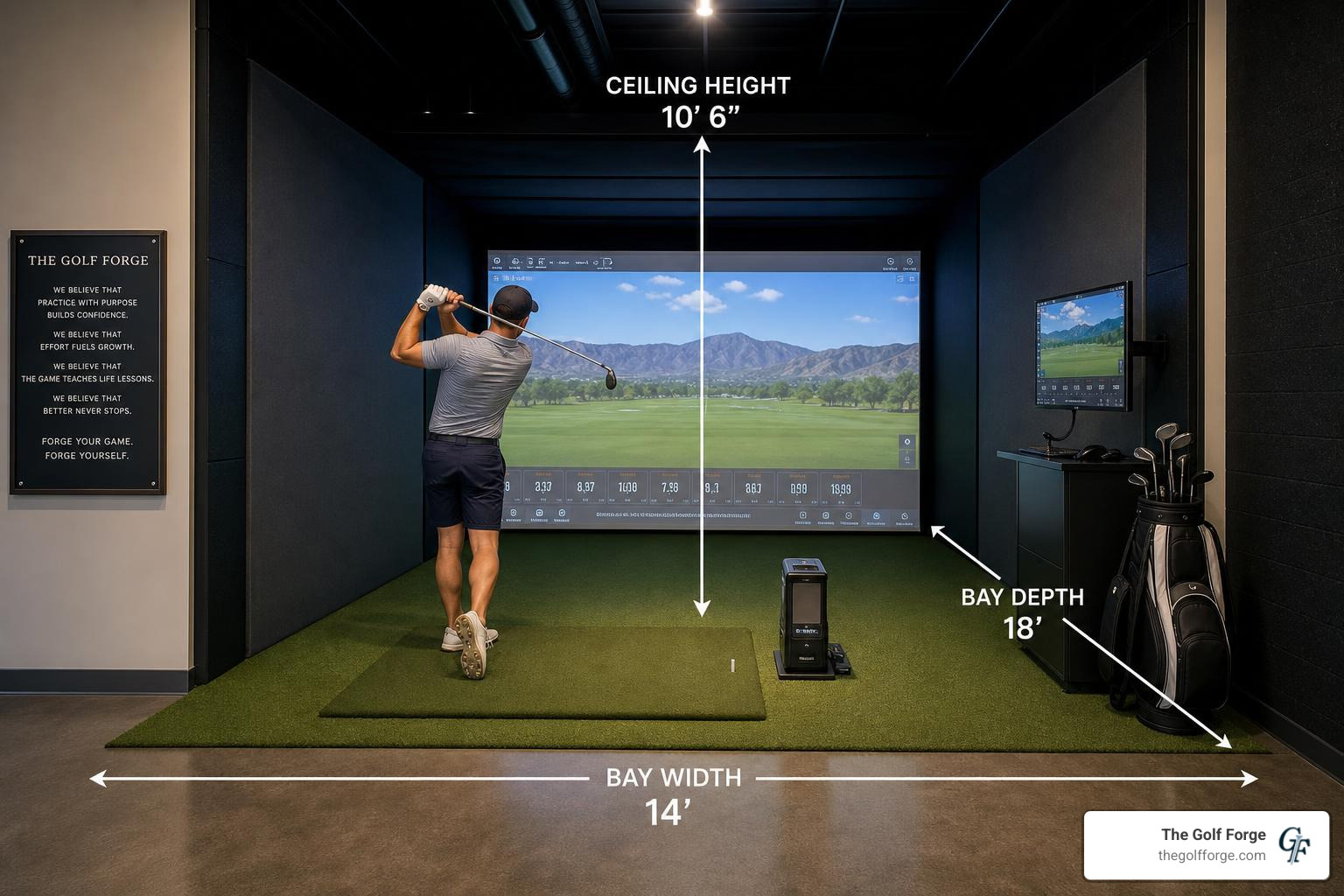
Here are the non-negotiable physical dimensions required for a safe, comfortable, and functional simulator bay:
Ceiling Height: While some residential setups scrape by with 9-foot ceilings, a commercial facility requires a minimum of 10 feet of clear height, though 11 to 12 feet is highly recommended. If a tall golfer walks in with a driver and feels even slightly claustrophobic, they will restrict their swing, ruining their experience. Watch out for low-hanging HVAC ducts, sprinkler heads, and light fixtures.
Bay Width: A standard commercial bay should be at least 14 to 15 feet wide. This allows for comfortable centering of the ball and accommodates both right-handed and left-handed players without needing to move the launch monitor or hitting mat.
Bay Depth: You need a minimum depth of 18 to 20 feet. This provides enough space for the safety buffer behind the screen (typically 1 to 2 feet), the distance from the screen to the tee (10 to 12 feet), and the swing clearance zone behind the golfer (6 to 8 feet), plus room for seating.
When designing your layout, prioritize high-quality, commercial-grade impact screens and heavy-duty side netting or padded walls. In a commercial environment, a single bay might see over 200,000 shots in a year. Cheap residential screens will sag, tear, and bounce balls back dangerously toward players. Investing in professional-grade enclosures ensures safety and long-term durability. For custom setups, you can explore commercial packages and Commercial Golf Simulators - Request Your Quote Today to get exact technical specifications for your buildout.
Financial Planning: Startup Costs, Pricing, and ROI Timelines
Launching a commercial golf simulator business requires careful capital allocation. Your startup costs will generally fall into three main buckets: equipment, leasehold improvements (buildout), and operating capital.
Let's break down a realistic mid-range budget for a 4-bay commercial facility:
Simulator Hardware & Software: High-end commercial-grade setups (projector, impact screen, hitting mat, enclosure, and a professional launch monitor like Foresight or Trackman) run between $20,000 and $70,000 per bay. For four bays, expect $80,000 to $280,000.
Facility Buildout: This includes partitions, flooring (turf and carpet), aesthetic design, lighting, seating, and lobby construction. Depending on the condition of your leased space, this can range from $50,000 to $150,000.
Software Licenses & Systems: Commercial software licenses, booking platforms, and automated security systems will cost $5,000 to $15,000 upfront.
To secure premium hardware, check out options like Get in the Green with Indoor Golf Simulators - Golfzon to compare commercial-ready systems and starting price points.

Pricing Strategies for High Profitability
To offset these initial costs, your pricing must balance accessibility with premium positioning. Most successful facilities charge hourly rates that scale based on peak demand:
Off-Peak (Weekday mornings/early afternoons): $35 - $45 per hour.
Peak (Evenings and weekends): $55 - $75+ per hour.
Because simulator rental is billed per bay rather than per person, it remains highly affordable for groups of three or four players, while maintaining excellent hourly yields for your business.
Maximizing Recurring Revenue Streams in a Commercial Golf Simulator Business
Relying solely on one-off hourly bookings is a recipe for seasonal stress. To build a resilient business, you must secure recurring revenue. This stabilizes your cash flow during slow summer months when golfers head to outdoor courses.
Individual Memberships: Offering a monthly Membership program is the single best way to secure predictable revenue. Members pay a flat monthly fee for a set number of practice hours per week or unlimited off-peak access.
Bulk Packages: For players who want flexibility without a monthly commitment, selling Punch Passes provides upfront cash flow while encouraging repeat visits.
Corporate Partnerships: Local businesses are always looking for unique perks. Selling a Corporate Membership allows local companies to book team-building events or offer simulator hours as an employee benefit.
Leagues and Tournaments: Organizing 8-to-12-week winter leagues keeps your bays fully booked during weekday evenings. Teams pay registration fees, and the consistent weekly attendance drives secondary spending on food, drinks, and retail.
Overcoming Key Operational Challenges in Indoor Golf
While running an indoor golf facility is highly rewarding, it comes with distinct operational hurdles. Knowing how to address these challenges early will save you thousands of dollars and endless headaches.
Staffing & Labor Costs: In a traditional retail or lounge model, payroll can quickly eat up your margins. Successful operators are increasingly turning to automation. By utilizing integrated software platforms, you can automate bookings, payments, and digital waivers.
24/7 Keyless Access: If you run a club-style model, implementing secure smart-locks allows members to book a session online, receive a temporary PIN or mobile pass, and access the facility completely unattended. This keeps your overhead incredibly low and allows you to generate revenue 24 hours a day.
Equipment Maintenance: High-volume commercial use wears down equipment quickly. Projector bulbs dim, hitting mats wear out, and screens get dirty. Establish a strict weekly maintenance checklist: rotate hitting mats to prevent dip wear, clean white screens regularly, and keep a stock of clean, premium-quality golf balls. Scuffed or dirty balls act like sandpaper on your impact screens and will ruin them in a matter of weeks.
Customer Acquisition: To keep your bays full, you need a steady stream of new players. Build relationships with local high school golf teams, country clubs, and corporate event planners. Offering a free 30-minute introductory session is often all it takes to turn a curious passerby into a lifetime member.
Frequently Asked Questions About Starting an Indoor Golf Venture
How much space is required for a commercial golf simulator business?
For a viable commercial business, you should plan on a minimum of 350 to 400 square feet per bay. A standard 4-bay facility, including a small lobby, seating areas, and restrooms, will require roughly 2,000 to 3,000 square feet. Always ensure your ceilings are at least 10 feet high (ideally 11–12 feet) to allow for safe, unrestricted swings with a driver.
What is the average ROI timeline for a commercial golf simulator business?
With healthy bay utilization rates (35% to 50% average occupancy) and diversified revenue streams, most well-managed facilities reach profitability within their first few months and achieve full ROI within 18 to 36 months. For a deeper look at real-world local operations, you can read about a Private Golf Simulator in West Jordan, Utah - ParSims to see how regional venues structure their booking and space utilization.
How do you attract non-golfers to an indoor golf facility?
Focus on gamification and a welcoming atmosphere. Many modern simulator software packages offer non-traditional games like target-shooting challenges, miniature golf, and multi-sport options. Pair these games with comfortable lounge seating, great music, simple food options, and beginner-friendly social events to remove the intimidating "country club" barrier.
Conclusion
Building a successful commercial golf simulator business requires the perfect blend of high-end technology, smart spatial planning, and a business model that prioritizes community and recurring revenue. By focusing on customer experience and keeping operations streamlined, you can tap into one of the most exciting and profitable trends in modern sports entertainment.
If you are located in Utah and want to experience what a premium, high-tech indoor golf setup looks like firsthand, come visit us at The Golf Forge. We offer 24/7 private bay access powered by industry-leading Foresight launch-monitor technology in South Jordan and West Jordan.
Ready to see how we do it, or want to book a session to dial in your own game? Book Now to reserve your bay, or explore our premium training and practice Services today!
