
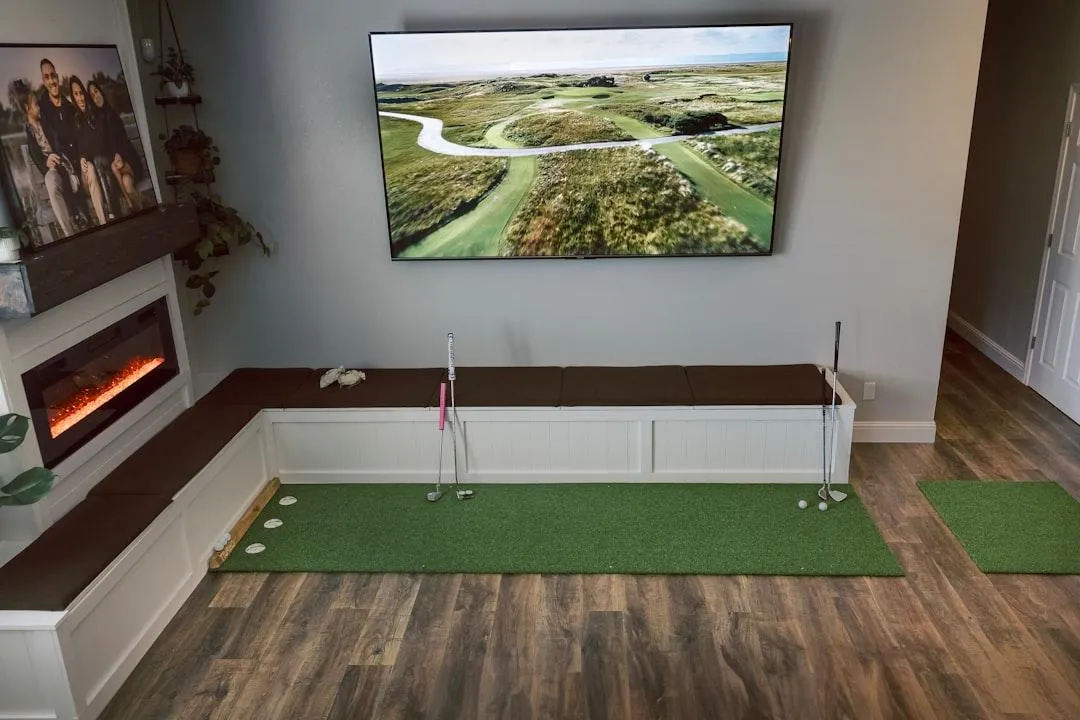
My Guide to a Reasonably Priced Golf Sim Setup
The Best Golf Simulators for the Price in 2026 (Quick Answer)
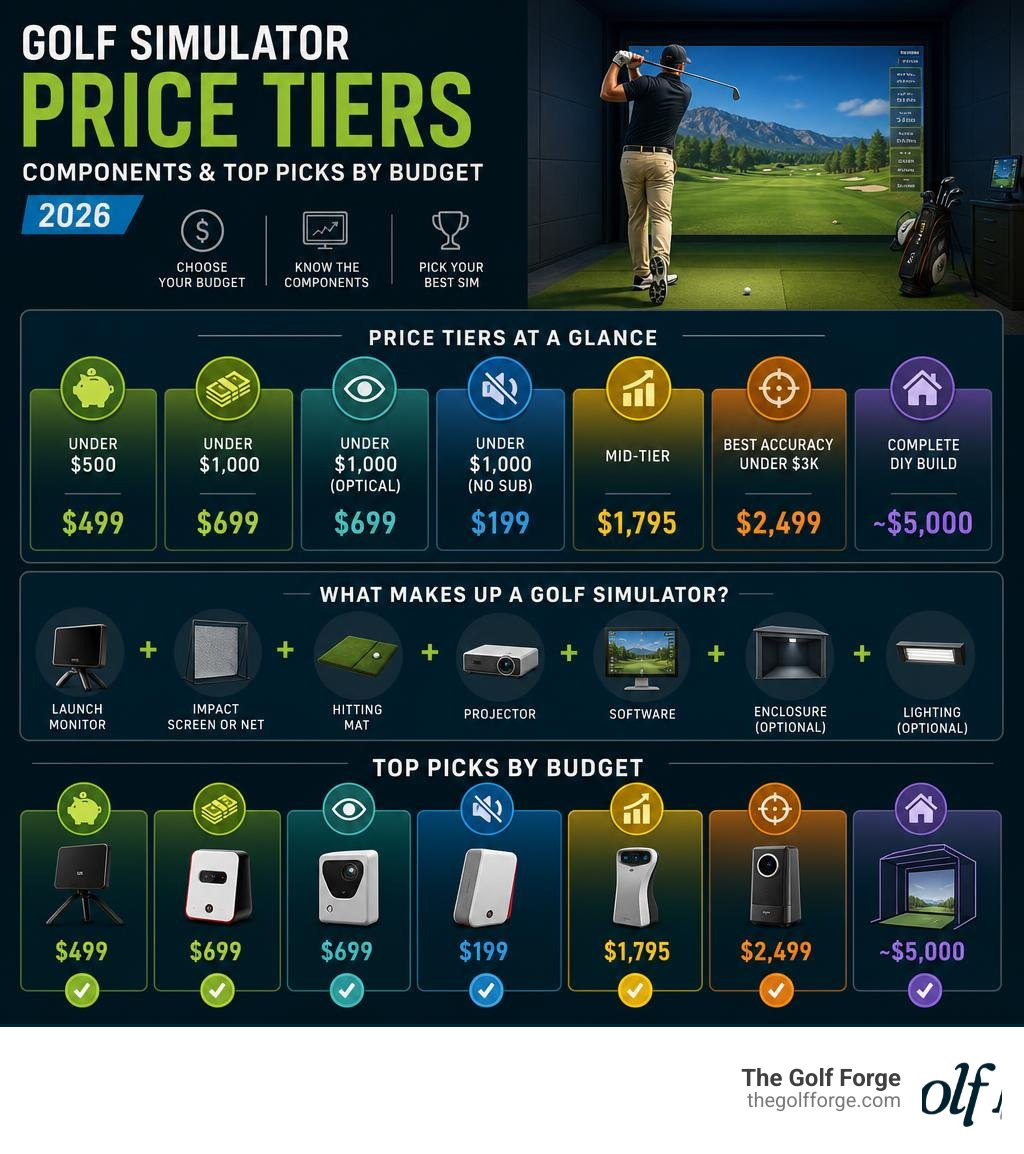
Finding the best golf simulator for the price doesn't have to mean spending a fortune. Here's a fast breakdown by budget:
Budget Best Pick Price Under $500 Garmin Approach R10 $499 Under $1,000 Rapsodo MLM2PRO $699 Under $1,000 (optical) Square Launch Monitor $699 Under $1,000 (no sub) Shot Scope LM1 $199 Mid-tier SkyTrak+ (closeout) $1,795 Best accuracy under $3k Bushnell Launch Pro Circle B $2,499 Complete DIY build "Noble Knight" SkyTrak+ setup ~$5,000
Five years ago, a home golf simulator meant a five-figure Trackman setup or nothing at all. Today, you can build a functional home bay for under $1,000 — or step into a polished mid-tier studio for around $3,000.
That shift has been dramatic. Increased competition between brands has pushed elite tracking technology into increasingly affordable devices. Whether you have a spare garage corner or a dedicated room, there's a setup that fits your space and your budget.
This guide cuts through the noise. We'll compare the top options at every price point — from entry-level portable launch monitors to complete studio packages — so you can make a smart decision before spending a dollar.
Finding the Best Golf Simulator for the Price in 2026
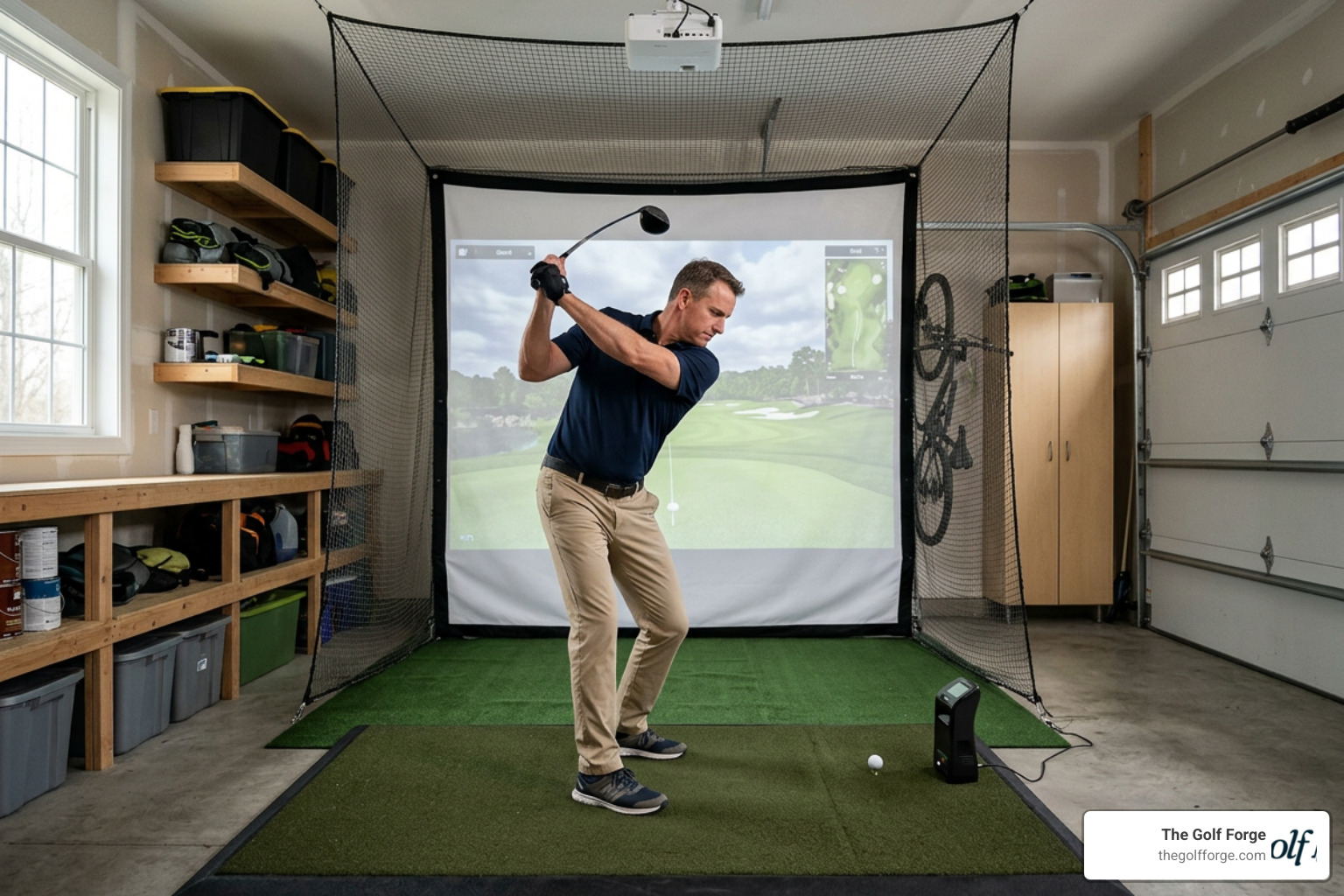
When we look at the landscape in June 2026, the term "golf simulator" can mean anything from a portable launch monitor paired with a net to a fully enclosed, professionally installed home theater setup. To find the best golf simulator for the price for your specific needs, you first have to understand the three primary budget tiers and how launch monitor technology impacts your space.
The Realistic Budget Tiers
The Entry-Level Budget (Under $1,000): At this price point, you are buying a highly capable portable launch monitor (such as the Garmin R10 or Rapsodo MLM2PRO) and pairing it with a quality net and a hitting mat. You will likely use an iPad or phone to view your data or run basic simulation software.
The Mid-Tier Sweet Spot ($1,500 to $3,500): This is where you find dedicated, highly accurate tracking devices like the SkyTrak+ or the Bushnell Launch Pro Circle B. These units bridge the gap between amateur practice and professional-grade data, offering robust simulator integration.
The Complete DIY Studio ($4,000 to $5,000+): This budget allows you to build a complete "turnkey" style bay in your garage or spare room. It includes a mid-tier launch monitor, a full impact screen enclosure, a short-throw projector, and a high-quality hitting mat.
Technology Type: Radar vs. Camera
The heart of any simulator is its launch monitor, which generally relies on one of two technologies:
Technology Type How It Works Best Environment Room Depth Needed Pros Cons Doppler Radar Sits behind the golfer; tracks the ball in flight using radio waves. Outdoors or large indoor spaces. 15–20 feet total (8–10 ft behind ball + 8–10 ft to screen). Highly portable, great for range use, tracks long ball flight easily. Struggles in tight indoor spaces; highly sensitive to metal objects or fluorescent lights. Photometric (Camera) Sits directly opposite the golfer; captures high-speed images of the impact zone. Indoors / tight spaces. 10–12 feet total (only needs clearance to swing the club). Pinpoint accuracy indoors, measures actual spin, requires very little space. Less portable, limited outdoor usability in direct sunlight.
If you are setting up in a tight garage or spare room in Utah, a camera-based unit is almost always the better choice because it drastically reduces the physical depth required to get accurate readings.
Top Budget Launch Monitors Under $1,000
If you want to get your home simulator journey started without empty-nesting your wallet, the under-$1,000 category has exploded with incredible options. Manufacturers are packing serious tracking capabilities into devices that fit in your golf bag.
For those looking to explore full enclosure packages and individual components, you can check out the Best Golf Simulators for Home 2026 - PlayBetter collection to see how these budget units scale up into complete home studios.
Let's break down the standout performers in this price range.
Why the Garmin Approach R10 is the Best Golf Simulator for the Price Under $500
The Garmin Approach R10 revolutionized the budget market when it was released, and with its permanent price drop to $499, it remains the undisputed king of the entry-level tier.
How it works: It is a portable Doppler radar unit that sits about 6 to 8 feet behind the ball.
The Software Experience: Out of the box, it includes Garmin's Home Tee Hero (which lets you play over 43,000 virtual courses) and comes with compatibility for top-tier software like E6 Connect and GSPro.
The Indoors Caveat: Because it is a radar unit, it needs room to see the ball fly. To get accurate spin data indoors, we highly recommend using Titleist RCT (Radar Capture Technology) balls. Without them, the R10 has to estimate spin, which can sometimes lead to inconsistent shot shapes on screen.
For a deeper dive into how radar units stack up against other tracking styles, read More details on choosing a Golf Launch Monitor.
Why the Rapsodo MLM2PRO is the Best Golf Simulator for the Price Under $1,000
Priced at $699 (and frequently found on sale for $649), the Rapsodo MLM2PRO is widely considered the best overall launch monitor under $1,000 "full stop."
Dual-Camera Technology: Unlike the radar-only options in this price class, the MLM2PRO features a dual-camera system. One camera tracks the ball flight, while the high-speed "Impact Vision" camera records your club hitting the ball at impact. This video feedback is an incredible training tool for diagnosing fat or thin shots.
Spin Measurement: When paired with the included Callaway RPT (Rapsodo Precision Technology) balls, the MLM2PRO directly measures spin rate and spin axis. This makes its indoor accuracy incredibly close to commercial monitors costing five times as much.
Software Ecosystem: It connects seamlessly with its native app, as well as E6 Connect and GSPro, making it a fantastic core engine for a budget home simulator bay.
Other Notable Under $1,000 Contenders
Square Launch Monitor ($699): This is a massive development for 2026. The Square is the first true optical (camera-based) launch monitor priced under $1,000. Because it sits to the side of the ball, it is the absolute best budget option for tight indoor spaces where you don't have the depth for a radar unit. It even features a direct plug-in for GSPro.
Swing Caddie SC4 Pro ($599 / $499 on special): A Doppler radar unit that operates as a standalone device with a built-in display screen. It is incredibly easy to use at the range without needing to connect to a phone, but still supports E6 Connect for home simulator play.
Shot Scope LM1 ($199): If your budget is razor-thin, the LM1 offers accurate basic data (carry distance, ball speed, club speed) with absolutely zero subscription fees. It's an excellent option for golfers who just want a digital caddie for net practice.
Mid-Tier and Complete Studio Packages Under $5,000
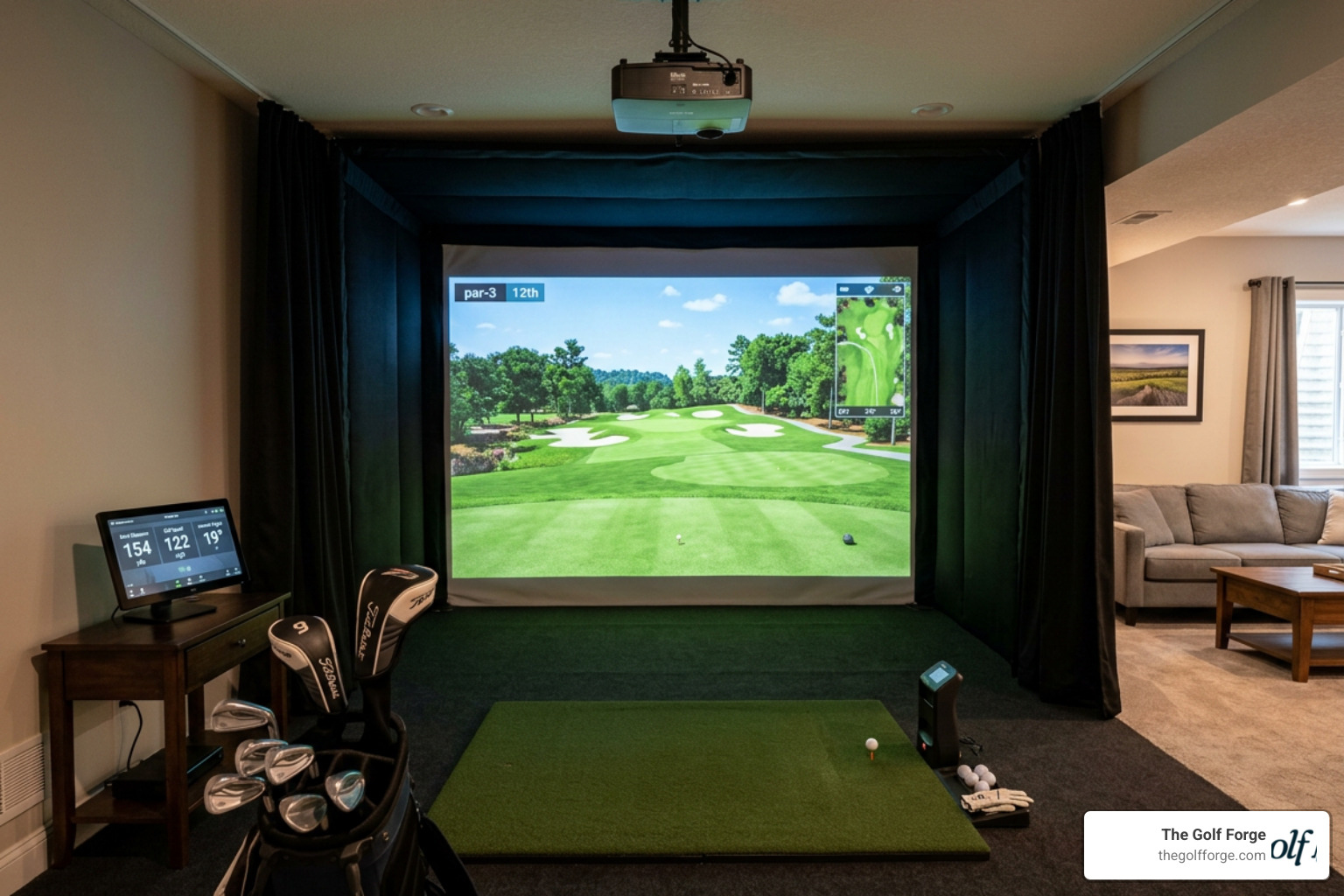
When you are ready to move past hitting into a basic net and looking at an iPad, a mid-tier budget of $3,000 to $5,000 allows you to build a complete, highly immersive home studio. At this level, you can choose between a curated, turnkey package or building a custom "Do-It-Yourself" setup.
If you are taking the DIY route, one of the most famous and highly regarded blueprints in the golf community is the "Noble Knight" build. You can explore the components and pricing of this legendary setup directly via the Noble Knight 2026: Honor Bound. Total Conquest - Master Your Swing guide.
SkyTrak+ and the DIY "Noble Knight" Build
The SkyTrak+ has become the gold standard for home simulators, especially now that it is available at a closeout price of $1,795 (down from its original $2,995).
Why It's a Giant Killer: The SkyTrak+ uses a dual-system approach: a photometric camera system combined with a dual Doppler radar. This allows it to track 20 different club and ball metrics—including club path and face-to-path—with extreme accuracy.
The "Noble Knight" Blueprint: By pairing the SkyTrak+ with budget-friendly but rugged components, you can build a system that delivers 85-90% of the performance of a $15,000 commercial simulator for under $5,000:
Launch Monitor: SkyTrak+ ($1,795)
Enclosure & Screen: GoSports 10x8ft Bay or similar premium DIY enclosure (~$800)
Projector: ViewSonic PX706HD short-throw 1080p projector (~$750)
Hitting Mat: Premium mat with joint protection like a Fiberbuilt Flight Deck (~$500)
PC & Software: Mid-range gaming PC running GSPro ($250/yr subscription) or SkyTrak's Game Improvement Plan ($149.99/yr).
This build is highly regarded because it doesn't compromise on the accuracy of the data, yet keeps the structural components affordable and easy to assemble in under an hour.
Bushnell Launch Pro Circle B and FlightScope Mevo Gen 2
If you want professional, tour-level accuracy but still want to keep the total hardware cost around $2,500, two other options dominate the mid-tier space:
Bushnell Launch Pro Circle B ($2,499): This unit uses the exact same camera-based hardware engine as the industry-standard Foresight sports monitors. It offers unmatched indoor accuracy. The trade-off is the subscription model: to unlock full simulation capabilities, you will need to pay for their Silver ($199/yr) or Gold ($499/yr) software packages. Even with the ongoing fees, it is the device many serious players choose because the raw data is incredibly precise.
FlightScope Mevo Gen 2 ($1,299 base): A massive update to the beloved Mevo Plus series. It is a radar-based unit that now supports advanced Pro Package upgrades and Impact Detection. At roughly $2,000 fully loaded, it represents some of the best value on the market for golfers who split their practice time 50/50 between an indoor garage bay and an outdoor driving range.
Key Factors to Consider When Building Your Home Setup
Building a home simulator is exciting, but a few simple planning mistakes can lead to damaged drywall, broken clubs, or sore joints. Here is what you must measure and plan for before buying:
Ceiling Height (The Magic Number): While some shorter players can swing a wedge with 8.5-foot ceilings, 10 feet is the magic number for a safe, comfortable, full-speed driver swing. If your ceiling is 9 feet, you can likely make it work, but you may feel restricted or find yourself clipping the ceiling with your longer clubs.
Room Width: You need a minimum of 10 feet of width to swing comfortably. However, if you want to accommodate both right-handed and left-handed players without constantly moving the launch monitor and hitting mat, you will need at least 14 feet of width so the hitting strip can be centered in the room.
Projector Quality & Throw Distance: Do not buy a standard living room projector. You need a short-throw projector (with a throw ratio of roughly 0.5 to 0.8). This allows you to mount the projector close to the screen (typically 8 to 10 feet away) so that your body doesn't cast a massive shadow on the screen while you are standing over the ball.
Hitting Mat Quality (Protect Your Joints): Do not skimp on your hitting mat. Cheap, thin driving range mats laid directly over concrete will quickly cause elbow tendonitis and wrist pain. Look for mats with thick, high-density foam backing or dedicated, replaceable fiber-hitting strips that mimic real turf and absorb the shock of downward iron strikes.
Frequently Asked Questions About Budget Golf Simulators
What is the absolute minimum space required for a home golf simulator?
To swing a driver safely, you need a room that is at least 10 feet wide, 12 feet deep, and 9 feet high (though 10 feet high is highly recommended). If you are using a radar-based launch monitor (like the Garmin R10), you will need an additional 6 to 8 feet of depth behind the ball, pushing your minimum room depth to 16 to 18 feet.
Do budget golf simulators require ongoing subscription fees?
Yes, most do. While some entry-level monitors like the Shot Scope LM1 ($199) have zero ongoing fees, most units require a subscription to unlock virtual course play. For example:
SkyTrak's Game Improvement Plan is $149.99/year.
Bushnell Launch Pro requires $199/year (Silver) or $499/year (Gold).
GSPro, the most popular third-party simulation software, costs $250/year.
How accurate are budget simulators compared to professional systems?
Remarkably accurate. Modern budget options under $1,000 (like the Rapsodo MLM2PRO) generally get within 1-2% of the ball speed, launch angle, and carry distance measurements of a $20,000 Trackman or Foresight GCQuad. The main difference is that budget units are more sensitive to perfect setup conditions (lighting, alignment, and using specific marked balls) to achieve that high level of accuracy.
Conclusion
Finding the best golf simulator for the price in 2026 comes down to matching your physical space with your budget. If you have limited room depth and want to build a dedicated indoor bay, a camera-based system like the SkyTrak+ or the Square Launch Monitor offers incredible value. If portability and outdoor range use are your priorities, a radar unit like the Garmin R10 or FlightScope Mevo Gen 2 will serve you beautifully.
Of course, building, calibrating, and maintaining a home simulator setup takes time, space, and a fair bit of troubleshooting. If you live in Utah and want to experience commercial-grade, tour-level simulation without the hassle of building your own garage setup, we have you covered.
At The Golf Forge, we offer 24/7 private bay access at our South Jordan and West Jordan locations. Our bays are powered by industry-leading Foresight Sports launch monitors—delivering pinpoint club and ball data in a premium, climate-controlled environment. Whether you want to practice your swing at 2:00 AM or play a round with friends on a rainy afternoon, our facilities provide the ultimate simulator experience.
Ready to take your game to the next level? Explore our professional simulator services and book your private bay today!