
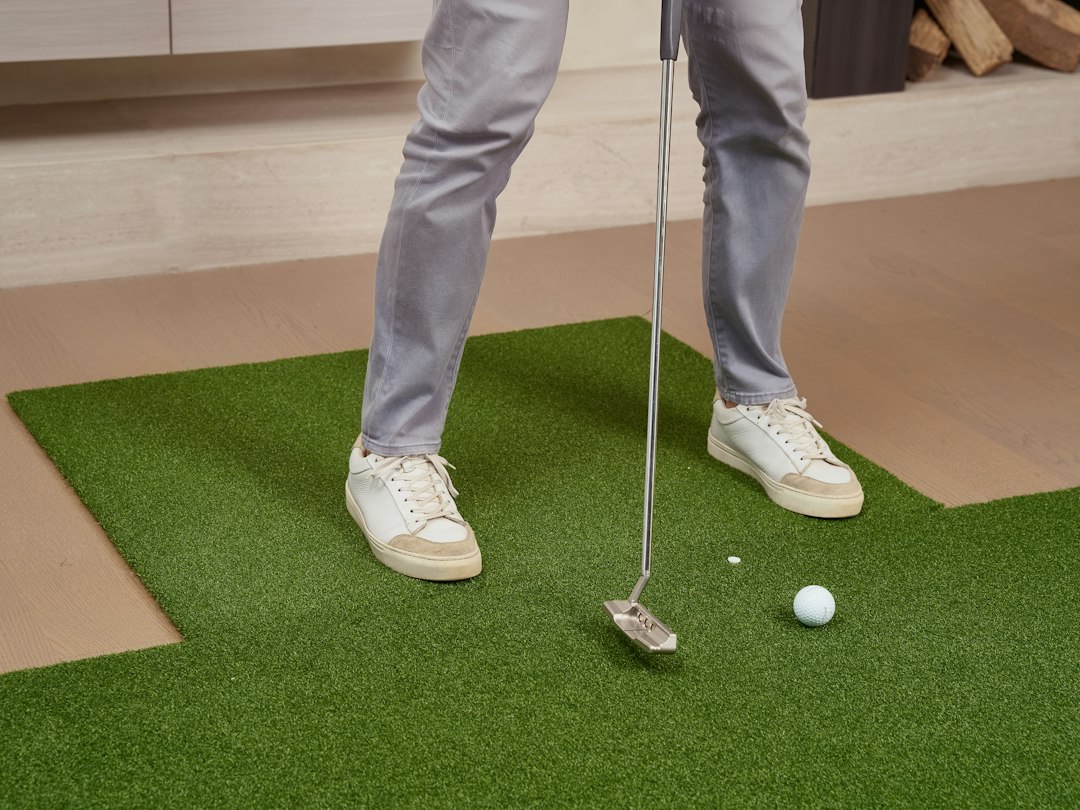
Master Your Stroke All Winter with an Indoor Putting Green
Choose an Indoor Putting Green That Fits Your Practice
Winter weather can cut into your putting practice. A mat that wrinkles or rolls at the wrong speed can make that practice frustrating. For most golfers, the best indoor putting green is a flat, non-slip mat about 9 feet long that rolls near 10 on the Stimpmeter. Choose a roll-up mat for a small room, a ball return for repeated short putts, or an adjustable-slope green to practice breaks.
For practice beyond the mat, The Golf Forge offers private, 24/7 indoor golf bays with Foresight launch-monitor data in South Jordan and West Jordan, Utah.
Types of Indoor Putting Surfaces and Mats
Finding the right putting surface comes down to understanding how different materials interact with your golf ball. A quality practice surface must lie completely flat, provide true roll mechanics, and maintain consistent friction. When evaluating surfaces, look closely at turf density, pile height, and backing construction.
High-density nylon weave or woven synthetic turf fibers mimic manicured bentgrass or Bermuda greens. Cheap felt or thin velvet alternatives tend to develop directional tracking, creases, and unnatural ball skips. Backing is equally vital: a heavy, non-slip rubber base keeps the mat securely anchored to your floor, preventing bunching or shifting during your stroke. High-density foam bases provide a stable foundation that smooths out minor subfloor imperfections while dampening sound.
Green Type | Best For | Typical Length | Stimpmeter Speed | Portability |
|---|---|---|---|---|
Roll-Up Alignment Mat | Compact spaces, apartments, quick daily drills | 8 – 10 feet | 10 – 14 | High (rolls into storage tube) |
Platform Green | Dedicated practice rooms, realistic cup drop | 10 – 14 feet | 10 – 11.5 | Low (semi-permanent panels) |
Multi-Break / Slope Green | Green reading, breaking putts, slope adaptation | 9 – 13 feet | 9.5 – 11 | Moderate (adjustable wedge base) |
Roll-Up Alignment Mats and Ball Returns
Roll-up alignment mats are the most popular home training surfaces for good reason. They set up in seconds, store easily, and provide immediate visual feedback. High-quality models feature printed track lines, face-squaring guides, and precise distance tick marks at critical lengths like 3, 5, and 7 feet.
A gravity ball return makes repetition effortless. Instead of walking down the mat after every three putts, the integrated track channels the ball right back to your stance. The SKLZ Accelerator Pro is a prime example of this design, measuring 9 feet by 16.25 inches with an engineered up-slope at the cup that feeds balls into a continuous return chute. This setup keeps your focus locked on tempo, setup alignment, and pure contact without constant interruption.
Adjustable Slope and Multi-Break Greens
While flat mats build a reliable, repeatable stroke path, real golf greens are rarely flat. Multi-break and adjustable-slope greens bridge the gap between indoor stroke mechanics and outdoor green reading.
These setups use movable foam wedges or pneumatic air bladders beneath the turf layer. You can create left-to-right sliders, severe right-to-left hooks, and subtle uphill or downhill transitions. Advanced designs support up to a 7.5% side slope and a 3% vertical grade. Practicing on breaking contours trains you to visualize entry speed and capture width—ensuring you don't push or pull putts when faced with real-world undulations.
Key Factors When Choosing an Indoor Putting Green
Selecting the right putting surface requires balancing your room dimensions, floor type, and performance goals. If you are refining your setup for the cold months, learning how to practice golf in the winter ensures your short game stays sharp year-round.
Turf Quality and Roll Authenticity: Look for dense synthetic fibers that eliminate ball bounce and directional grain bias.
Base Construction: Ensure the backing has sufficient weight or textured rubber grip to prevent shifting on slick floors.
Cup Style: Choose between elevated ramp cups with drop-in depth, flat graphic targets, or compression rings that reject off-speed putts.
Storage Convenience: If you share living space, prioritize roll-up models that unroll crease-free out of a storage box or tube.
How to Choose the Right Size Indoor Putting Green
Room dimensions dictate what you can reasonably fit. A standard putting mat requires at least 10 to 12 feet of clear, unobstructed length. This gives you room for an 8- to 9-foot putting run along with sufficient standing clearance behind the ball.
If your practice area is confined to a hallway or apartment living room, a narrow mat (12 to 18 inches wide) keeps your space tidy while providing an authentic roll. For dedicated basements or bonus rooms, wider greens (3 to 4 feet wide or larger) accommodate angled putts, multi-cup layouts, and comfortable stances where your feet rest on the exact same surface level as the ball.
Matching Mat Speed to Real Course Greens
Green speed is measured using a Stimpmeter—the standard tool used by golf course superintendents. Typical municipal and resort courses roll between 9 and 10 on the Stimp, while championship layouts and private clubs often run between 10.5 and 12.5.
A practice surface rolling around a 10 Stimp provides the most practical training baseline. Be aware that the floor underneath directly impacts your speed:
Hardwood, tile, or concrete: Speeds up thin mats, sometimes pushing roll ratings from 10 up toward 13 or 14.
Low-pile commercial carpet: Provides firm support that closely matches manufacturer specs.
Plush residential carpet: Causes thin mats to sink slightly, introducing unwanted friction, foot prints, and speed drops down to 8 or 9.
High-Impact Drills to Elevate Your Putting Stroke Indoors
Targeted drills transform casual carpet putting into meaningful skill development. Combining focused home routines with dedicated indoor golf practice builds a reliable stroke that holds up under tournament pressure.
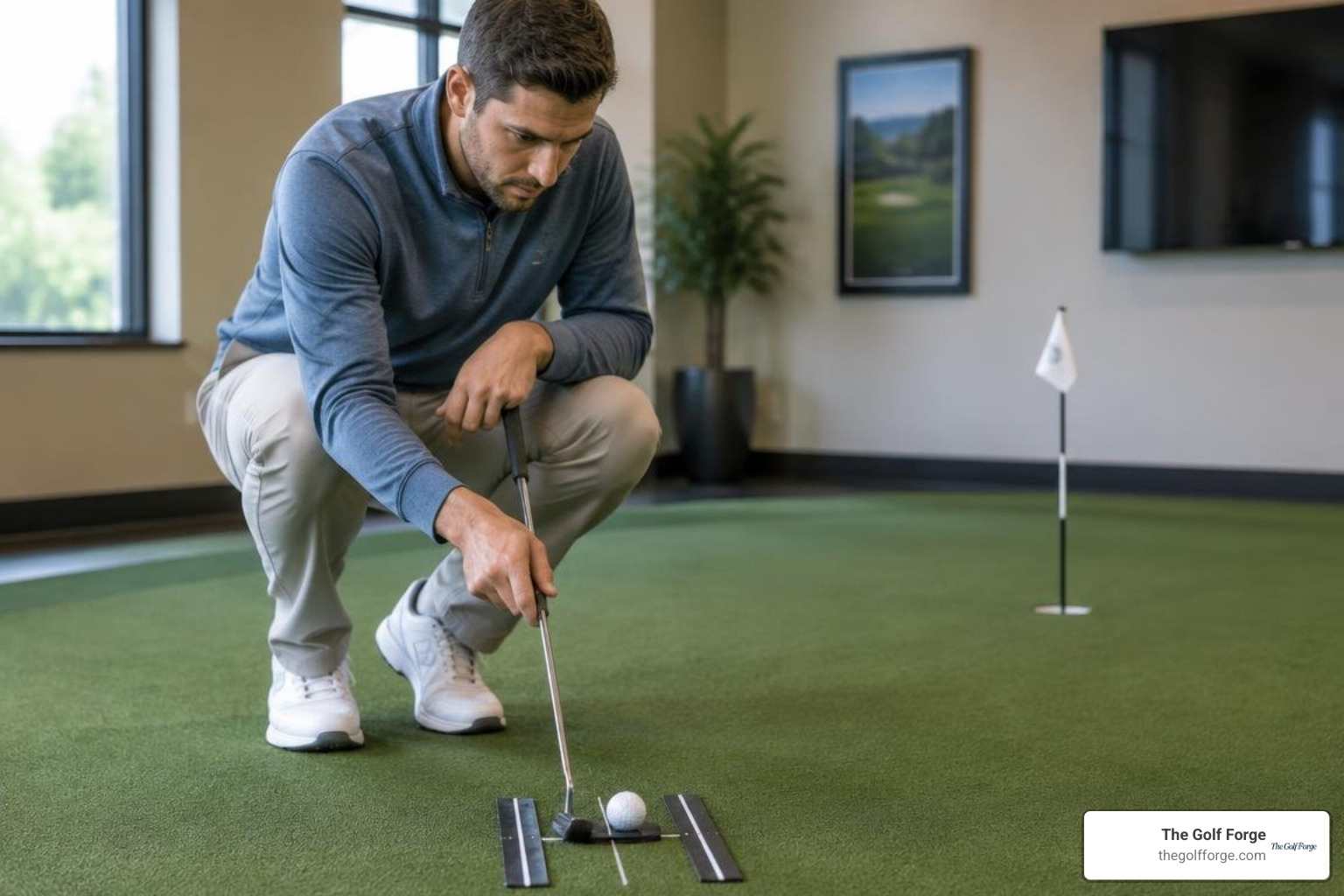
Integrating structured drills into your indoor golf training routine ensures your clubface delivers consistent start lines every time you step over a putt.
Benefits of Practicing on an Indoor Putting Green
Regular indoor practice strips away variables like wind, spike marks, and aerated greens, giving you pure feedback on your fundamentals:
Face Angle Control at Impact: Over 85% of a putt's initial start direction is dictated by the face angle at impact. A true-rolling indoor surface instantly reveals open or closed tendencies.
Stroke Path Consistency: Visual guide tracks train your eyes to recognize a square setup and a clean, pendulum arc.
Winter Skill Retention: Daily 10-minute sessions prevent your touch, rhythm, and eye-hand coordination from rusting during off-season downtime.
Distance Control and Speed Calibration Drills
Great putters avoid three-putts by mastering distance control. Use these two structured drills to calibrate your touch:
The Ladder Progression Drill: Place markers at 3, 5, 7, and 9 feet. Hit two balls to each distance marker. Your goal is to roll the ball to rest exactly on the line without rolling more than 12 inches past.
The Ghost Cup Boundary Drill: Place a coin or tee peg 8 feet away. Set an alignment rod or string line 17 inches behind it. Hit putts that pass directly over the coin while stopping short of the boundary barrier. This develops optimal pace—ensuring putts carry enough speed to hold their line without blowing past on a miss.
Frequently Asked Questions About Indoor Putting Greens
Do putting mats really improve your putting on real greens?
Yes. Quality indoor greens deliver flat, consistent roll dynamics that sharpen face-angle control and start-line accuracy. Because you eliminate unpredictable outdoor turf flaws, you can focus purely on developing a square clubface at impact and a repeatable stroke tempo.
Can you place an indoor putting green on carpet?
Yes, but the carpet's thickness matters. Thin mats placed over plush residential carpet can sag under your feet and slow down the ball. For best results on thick carpet, place a firm sub-base (such as an interlocking foam tile layer or a thin plywood sheet) underneath your green to maintain a flat, firm roll.
What is the ideal Stimpmeter speed for an indoor green?
A Stimpmeter speed between 9.5 and 10.5 is ideal for most players. This range replicates the pace of well-maintained public and private golf courses, allowing you to build intuitive speed control that translates smoothly to outdoor rounds.
Conclusion
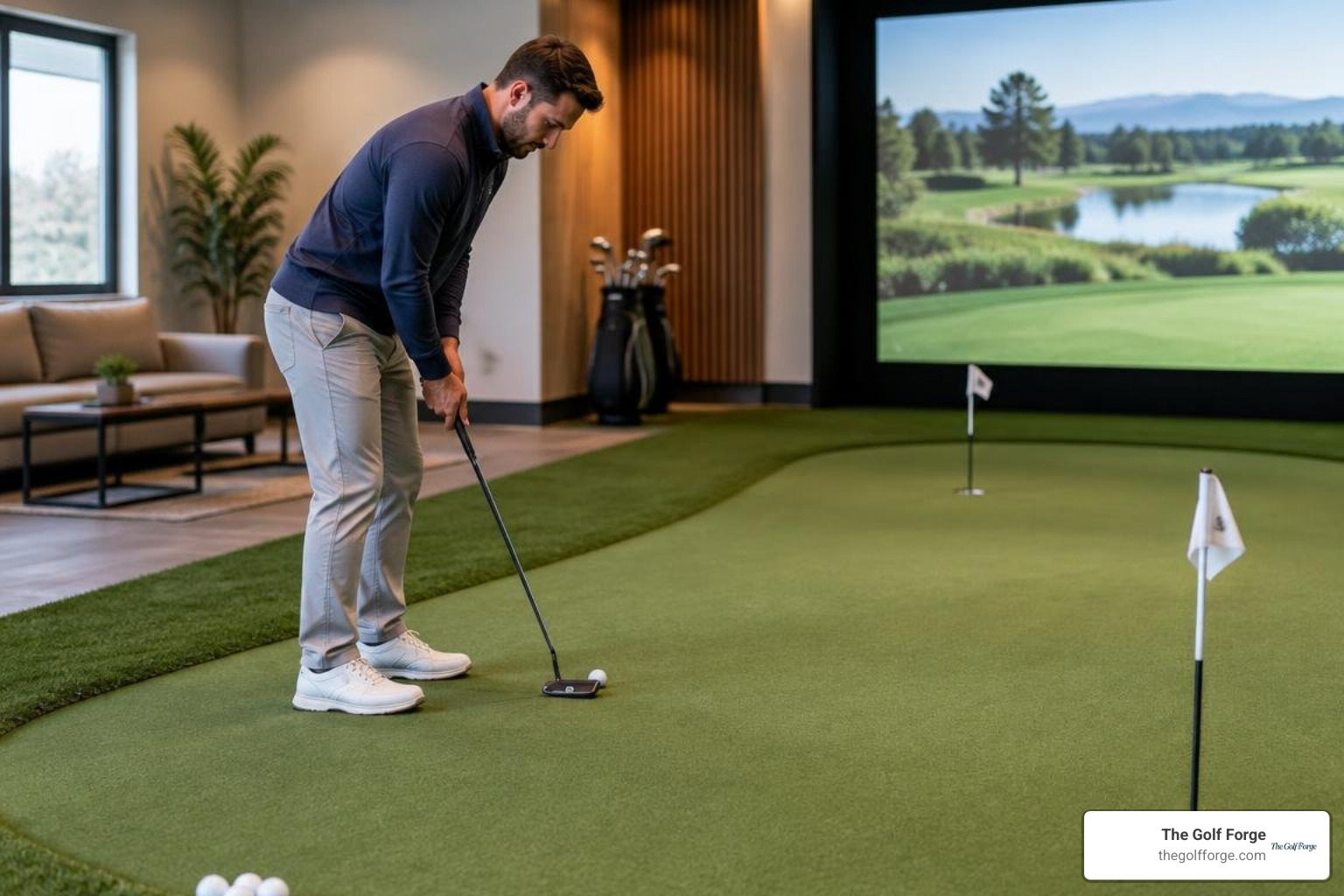
A dedicated indoor putting setup gives you the repetition, stroke feedback, and muscle memory needed to shave strokes off your game all winter long. By pairing true-roll surface mechanics with disciplined distance drills, you will step onto the first tee in the spring with complete confidence in your flatstick.
While home greens are perfect for grooving your stroke, taking your full game to the next level requires comprehensive swing analytics, impact feedback, and complete course simulation. At The Golf Forge, we offer 24/7 private indoor golf bays powered by tour-proven Foresight launch monitors in South Jordan and West Jordan, Utah. Whether you want to dial in your yardages, practice with an experienced swing coach, or enjoy a flexible membership tier (Bronze, Silver, Gold, or Corporate), our weather-proof studios deliver the ultimate training environment.
Ready to transform your game year-round? Explore complete indoor practice and training solutions and book your private bay today!