
The Top Indoor Foam Golf Balls for Safe Year-Round Practice
Safe Indoor Practice Starts With the Right Foam Ball
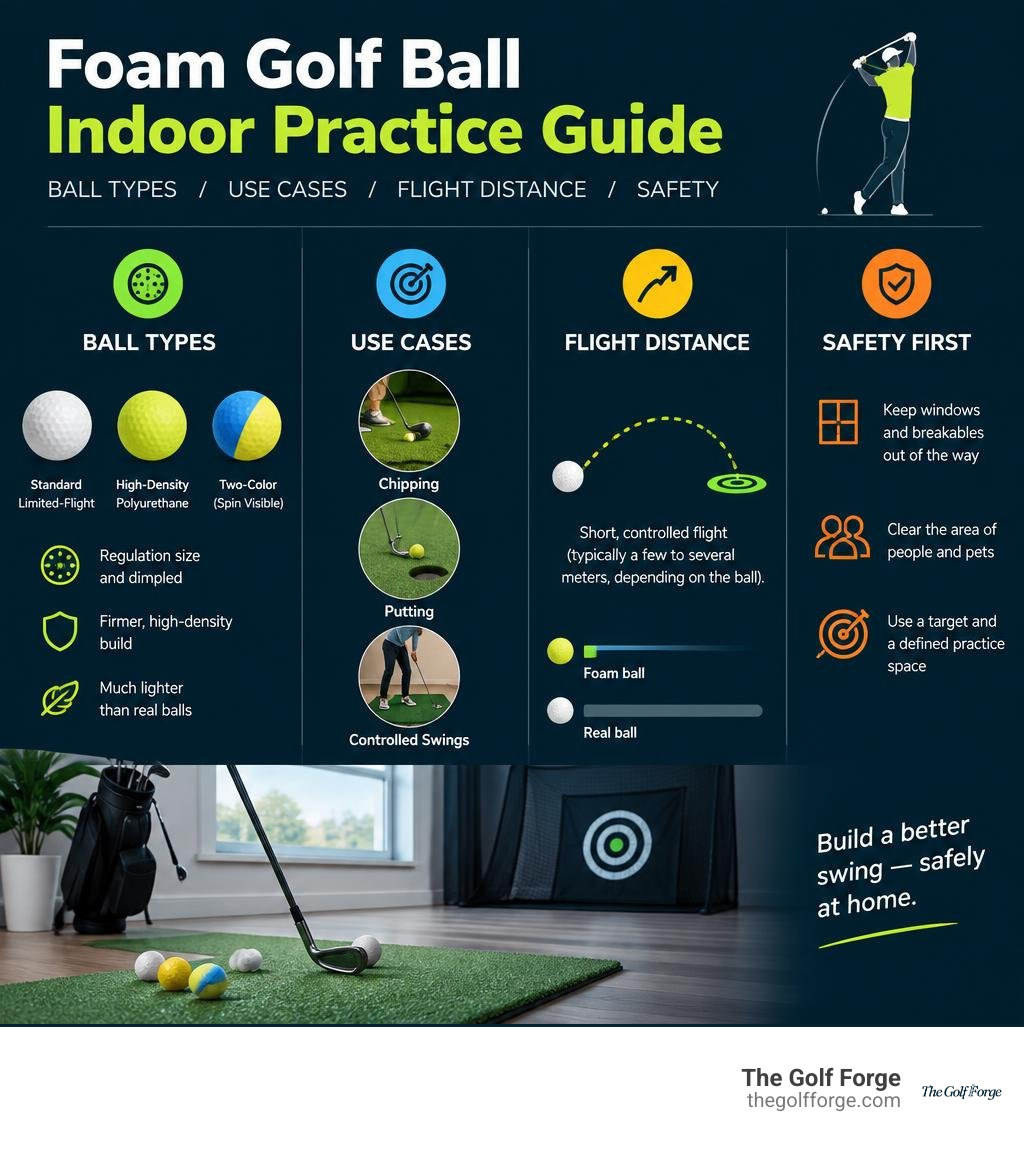
Bad weather, a busy schedule, and limited range access can make it hard to keep your swing sharp. Foam golf balls for indoor practice are a low-risk way to work on chipping, putting, and controlled swings in a small space, because they are much lighter than real golf balls and designed to travel a short distance. For a broader look at the category, Wikipedia’s golf ball overview explains how standard ball construction and weight differ from limited-flight training options.
For the best results, choose regulation-size, dimpled foam balls with a firmer high-density build. Use them with a target and a clear practice area, but keep windows, breakables, people, and pets out of the shot line. They are excellent for contact, start direction, and short-game rhythm - not a perfect replacement for real-ball speed, compression, or launch data.
When you need to move from feel-based home reps to measurable feedback, private 24/7 bays at The Golf Forge provide Foresight Falcon launch-monitor data and access to swing coaching in South Jordan and West Jordan, Utah.
In this roundup, we compare the top foam-ball styles for indoor use, including standard limited-flight balls, denser polyurethane options, and two-color models that make spin easier to see.
Why Foam Practice Balls Excel for Home Training
Maintaining a consistent swing during the cold winter months or between hectic workdays can be a challenge. That is where dedicated indoor golf practice comes in. Hitting regulation golf balls in a living room, basement, or garage poses serious risks to drywall, windows, and light fixtures.
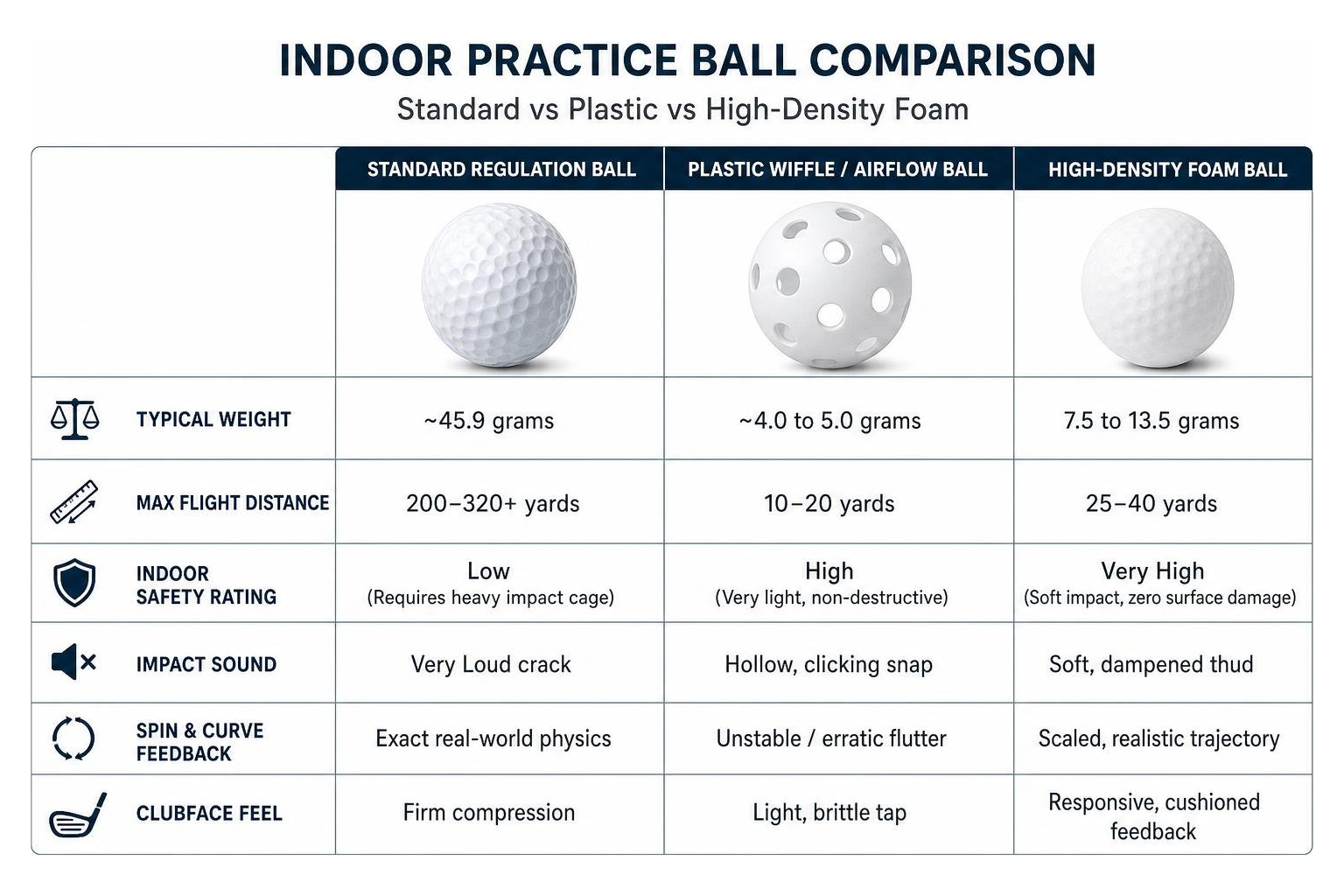
Standard golf balls weigh around 45.9 grams and carry immense kinetic energy off the clubface. Foam golf balls, by contrast, drastically reduce mass and velocity. High-density polyurethane models typically weigh between 7.5 and 13.5 grams—roughly 16% to 30% of a real ball's weight. When struck, the foam compresses and dissipates impact energy immediately. Even on a full swing, a stray strike against a painted wall or cabinet will merely bounce harmlessly rather than leave an expensive dent.
Another major benefit is acoustic dampening. Real golf balls generate loud cracking noises upon club impact and rebound forcefully off surfaces. Foam balls produce a muted, quiet thud that keeps your household and neighbors undisturbed, making early-morning or late-night drills completely feasible.
Feature / Metric | Standard Regulation Ball | Plastic Wiffle / Airflow Ball | High-Density Foam Ball |
|---|---|---|---|
Typical Weight | ~45.9 grams | ~4.0 to 5.0 grams | 7.5 to 13.5 grams |
Max Flight Distance | 200–320+ yards | 10–20 yards | 25–40 yards |
Indoor Safety Rating | Low (Requires heavy impact cage) | High (Very light, non-destructive) | Very High (Soft impact, zero surface damage) |
Impact Sound | Very Loud crack | Hollow, clicking snap | Soft, dampened thud |
Spin & Curve Feedback | Exact real-world physics | Unstable / erratic flutter | Scaled, realistic trajectory |
Clubface Feel | Firm compression | Light, brittle tap | Responsive, cushioned feedback |
While perforated plastic airflow balls are light, their hollow structure tends to crack under high swing speeds and provides unnatural flight fluttering. High-density foam models offer the sweet spot of safety, structural durability, and authentic aerodynamic behavior.
Top-Rated Foam Golf Balls for Indoor Practice: Reviews and Performance Breakdown
Finding the right training ball depends on whether you are working on living room chip shots, full iron swings, or spin control around the green. Let’s break down the best foam practice ball categories currently on the market.
Standard Foam Practice Balls
Standard foam golf balls—such as classic limited-flight options from brands like Franklin Sports—are engineered primarily for restricted-distance short game work. These models feature a soft sponge-like core and an ultra-lightweight profile designed to stay under a 30-yard flight ceiling even when hit firmly.
They are budget-friendly, typically sold in packs of 12 or more complete with a mesh storage bag. If your primary goal is practicing soft pitch shots across the rug into a pop-up chipping target, standard foam balls provide unmatched living room safety at an accessible price point.
High-Density PU Foam Balls
For golfers looking to make full iron swings, high-density polyurethane (PU) balls represent a significant step up in construction. Models like FORB Foam Golf Balls feature a molded 336-dimple aerodynamic surface pattern and weigh roughly 7.5 grams per ball.
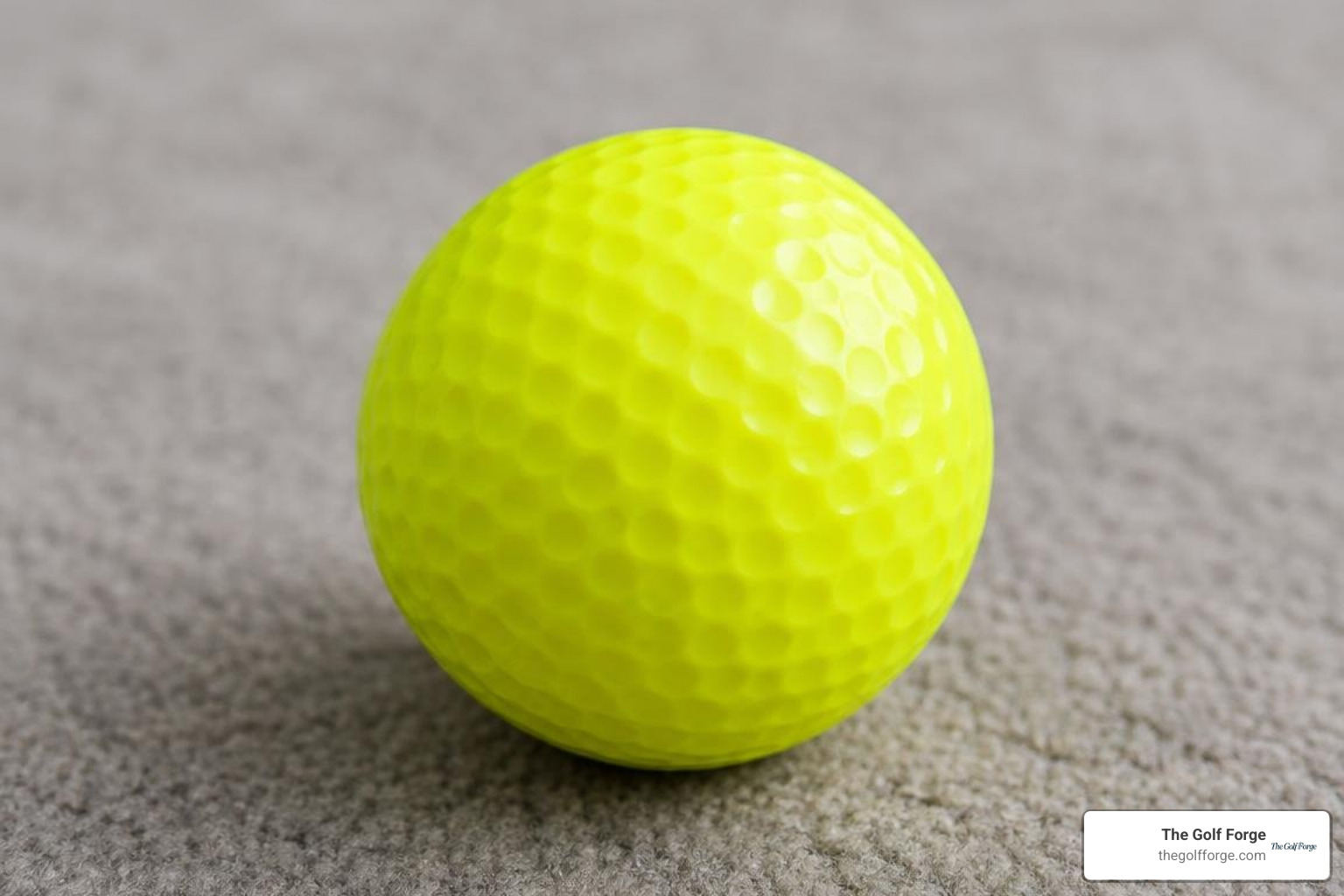
The extra density provides realistic resistance through impact without adding dangerous mass. The molded dimples allow the ball to grab the air cleanly, enabling you to identify genuine draws, fades, and straight pushes rather than random wobbles. Available in high-visibility neon yellow or white, these balls offer clear path tracking from impact to landing.
Dual-Color Foam Balls
If you want to dial in your scoring clubs, dual-color models—such as the IZZO Tru Spin design—are one of the most effective foam golf ball designs for visual feedback. These balls are molded with two distinct color hemispheres (such as high-contrast yellow and black or orange and white).
When you strike a wedge shot, the rotating hemispheres provide instant visual feedback on your spin axis and rotational speed. A pure strike shows a tight, clean rotation along a horizontal axis, while a glancing blow or side-spin slice shows an erratic, tilted spin axis. This allows you to evaluate face-to-path relationships visually without needing an electronic tracking system.
Regulation-Size Foam Balls
For serious swing training, regulation-size foam balls matching the official 1.68-inch diameter offer the closest visual match to what you see on the course. Advanced versions, like Rukket Tru-Spin models, weigh in at a solid 13.5 grams and utilize multi-layer polyurethane to simulate true compression feel.
Many of these premium limited-flight golf practice balls also incorporate photo-luminescent outer coatings. By exposing them to a bright lamp or UV flashlight for a few moments, they glow brightly for 10 to 15 minutes, allowing you to practice in low-light basement settings or evening backyard conditions without losing track of your targets.
Key Features to Look For in Home Practice Balls
To get the most out of your training reps, keep an eye out for specific material specs and aerodynamic traits.
How to Choose Foam Golf Balls for Indoor Practice Based on Ball Weight and Construction
The performance of an indoor practice ball is determined largely by its foam formulation:
Low-Density Sponge Foam (3–5 grams): Extremely soft and squishy. These are ultra-safe for small children or very tight spaces, but they offer little tactile feedback and compress too easily on full swings.
Medium-Density PU Foam (7.5 grams): The versatile standard for all-around chipping and casual iron swings. They produce authentic trajectory curves while keeping impact forces low.
High-Density Compact Foam (12–14 grams): The premium tier for regular golfers. These balls produce solid tactile feedback through the golf shaft, hold their shape over hundreds of impacts, and accurately reflect dynamic launch angles.
The structural durability of foam golf balls is another critical factor. Cheaper sponge balls can split along the mold seams when struck repeatedly by wedge grooves. High-density PU balls absorb sharp grooves easily and rebound to their original spherical shape shot after shot.
Aerodynamics, Dimple Design, and Visual Feedback
Just like real tour balls, practice balls rely on surface dimples to generate aerodynamic lift and stability. Smooth foam balls will knuckle through the air unpredictably. Look for models with 300 or more molded dimples.
Dimples allow the backspin imparted by your clubface to interact with the air, producing a scaled-down version of your true ball flight. If you hit a sweeping hook, a quality dimpled foam ball will curve noticeably within its 15-to-25-yard flight path, letting you diagnose swing flaws immediately. Pairing dimpled designs with high-contrast colors makes it easy to track spin and trajectory indoors.
Maximizing Your At-Home Practice: Best Drills and Setup Safety
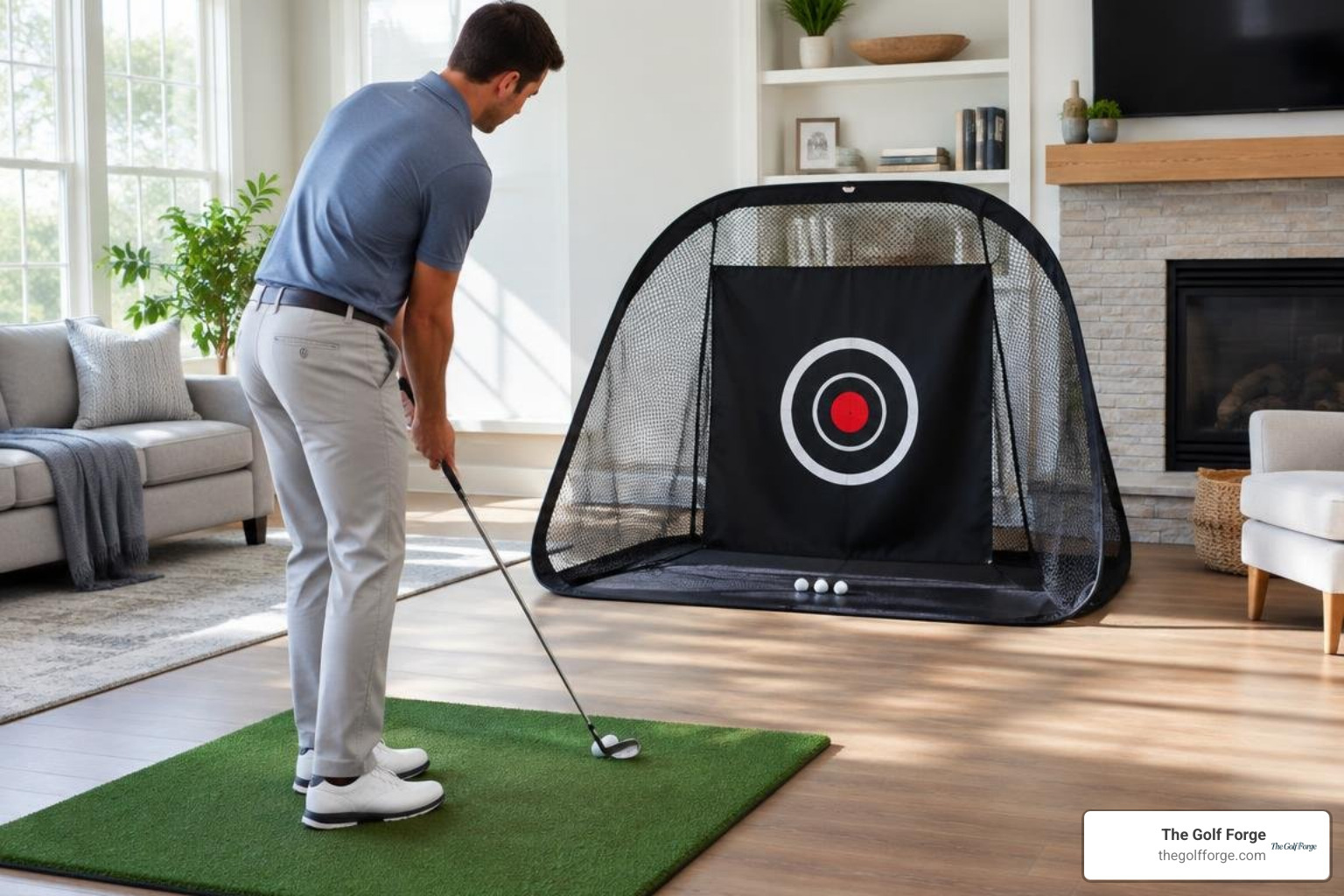
To turn living room sessions into real swing progress, structure your training around deliberate contact drills and safety checks:
Verify Overhead Clearance: Before swinging any club indoors, take several slow-motion practice swings with your longest club to confirm you have ample clearance from ceilings, ceiling fans, and light fixtures.
Use a Dedicated Hitting Mat: Never hit golf balls directly off residential carpet or hard flooring. A proper hitting strip or mat protects your wrists from turf shock, preserves your flooring, and ensures proper clubhead turf interaction.
Low-Point Control Drill: Place a strip of painter's tape two inches behind your foam ball on the mat. Practice making crisp iron contact where your club strikes the ball first without catching the tape on the downswing.
Start-Line Gate Drill: Set two lightweight obstacles (like water bottles or alignment cups) two feet in front of your hitting mat, leaving a six-inch gap. Practice chipping foam balls cleanly through the gate to dial in face angle control at impact.
Integrating these exercises into your weekly indoor golf training routine helps build reliable motor patterns and refined short-game touch.
The Limitations of Foam Practice Balls: When to Transition to Real Simulator Bays
While foam practice balls are fantastic for low-impact drills, they have natural physical limitations. Because foam compresses differently than a solid multi-layer urethane golf ball, it cannot provide exact ball speed, dynamic spin rate, or authentic carry distance data.
Furthermore, consumer camera and radar launch monitors struggle to track foam balls accurately because the ball's lightweight material, reduced initial velocity, and unique reflectivity throw off standard tracking algorithms. To measure true distance gaps, spin decay, and ball speed, you need regulation balls and professional-grade tracking equipment.
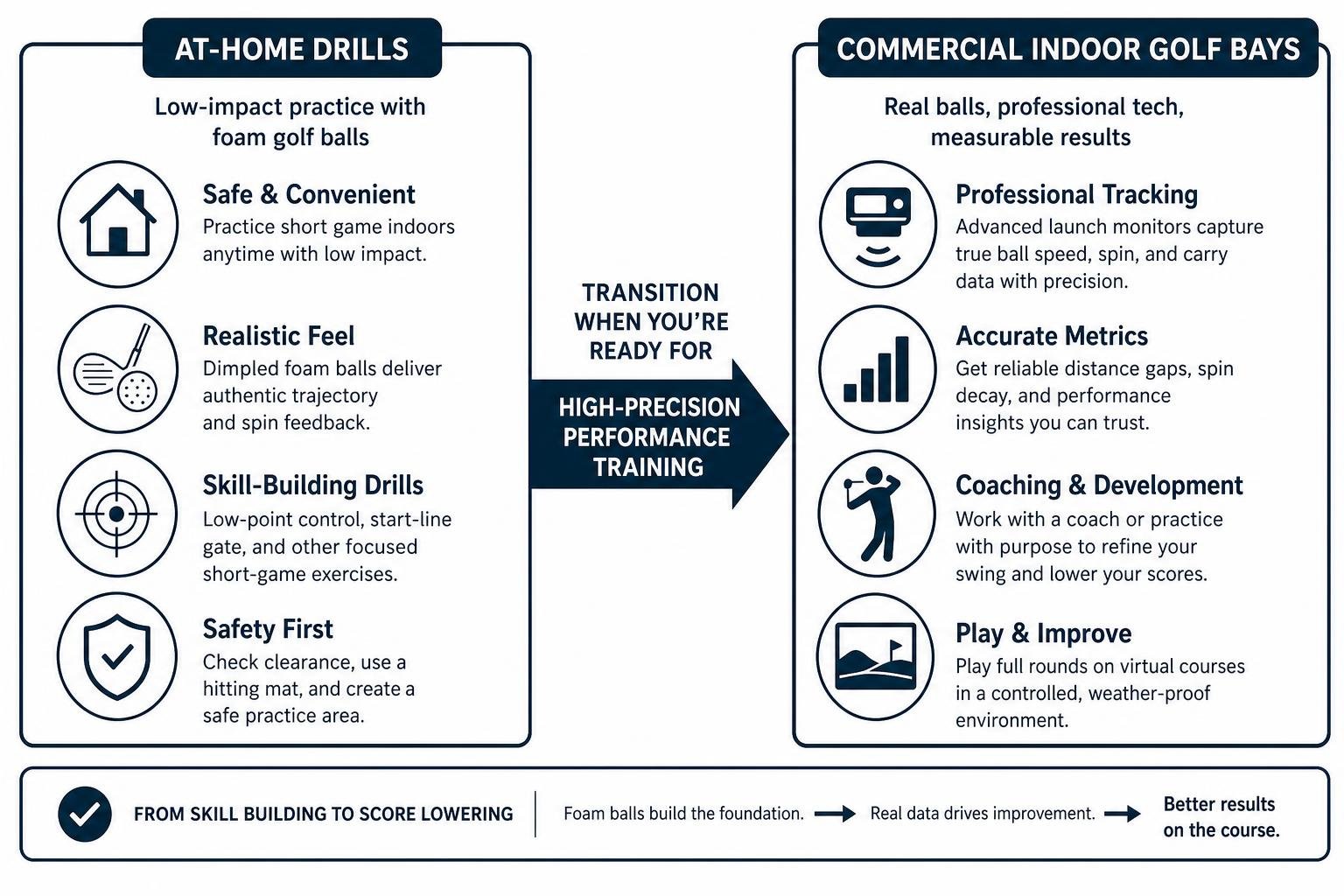
When you are ready to transition from casual home drills to high-precision performance training, visiting a dedicated indoor golf simulator practice facility provides the precise metrics required to truly lower your handicap. At The Golf Forge, our private 24/7 bays utilize industry-leading Foresight Falcon overhead launch monitors to capture high-speed clubhead delivery and real ball data with pinpoint precision.
Whether you are working alongside a professional swing coach to refine your swing path or playing a full round on championship virtual courses, structured practice in a controlled, weather-proof bay ensures your indoor work translates seamlessly to the golf course.
Frequently Asked Questions About Indoor Practice Balls
Are Foam Golf Balls for Indoor Practice Safe to Hit Without a Net?
Yes. Because high-density foam balls weigh only a fraction of a standard golf ball, their kinetic impact energy is extremely low. When struck against standard drywall, baseboards, or interior doors, they bounce off gently without puncturing or marking the surface. However, we always recommend aiming away from delicate glassware, framed artwork, and computer monitors, and ensuring pets and family members remain well behind the hitting area.
How far do foam practice golf balls travel on full swings?
On a full swing with an iron or driver, a standard foam golf ball typically travels between 20 and 40 yards outdoors. In an indoor setting, the ball will travel 10 to 20 feet before losing velocity and dropping softly. Their low mass and high aerodynamic drag quickly arrest forward momentum, making them safe for small backyards and indoor rooms.
Can foam golf balls register accurately on personal launch monitors?
Most personal launch monitors are calibrated specifically for the mass, compression profile, and reflective characteristics of regulation golf balls. Radar-based units rely on Doppler shifts that assume standard ball velocity and weight, while photometric units look for specific dimple patterns and rotation speeds. While some systems can detect basic clubhead speed, foam balls will show drastically distorted ball speed and spin numbers. For an accurate golf simulator experience, hitting real golf balls on advanced launch monitors is essential.
Conclusion
Foam golf balls are an unbeatable, low-cost training aid for keeping your hands active, refining short-game rhythm, and practicing basic swing mechanics in the comfort of your home. They protect your living space while providing immediate visual feedback on start lines and contact quality.
However, when you need exact carry distances, true launch angles, and comprehensive club delivery metrics, nothing beats practicing with real golf balls in a world-class facility.
Explore our complete guide to indoor golf practice balls to learn more about training setups, or take your game to the next level by booking a session at The Golf Forge. With state-of-the-art Foresight Falcon technology, private 24/7 access, tailored membership tiers (Bronze, Silver, Gold, and Corporate), and expert swing coaching at our South Jordan and West Jordan, Utah locations, you can train with purpose all year long.