
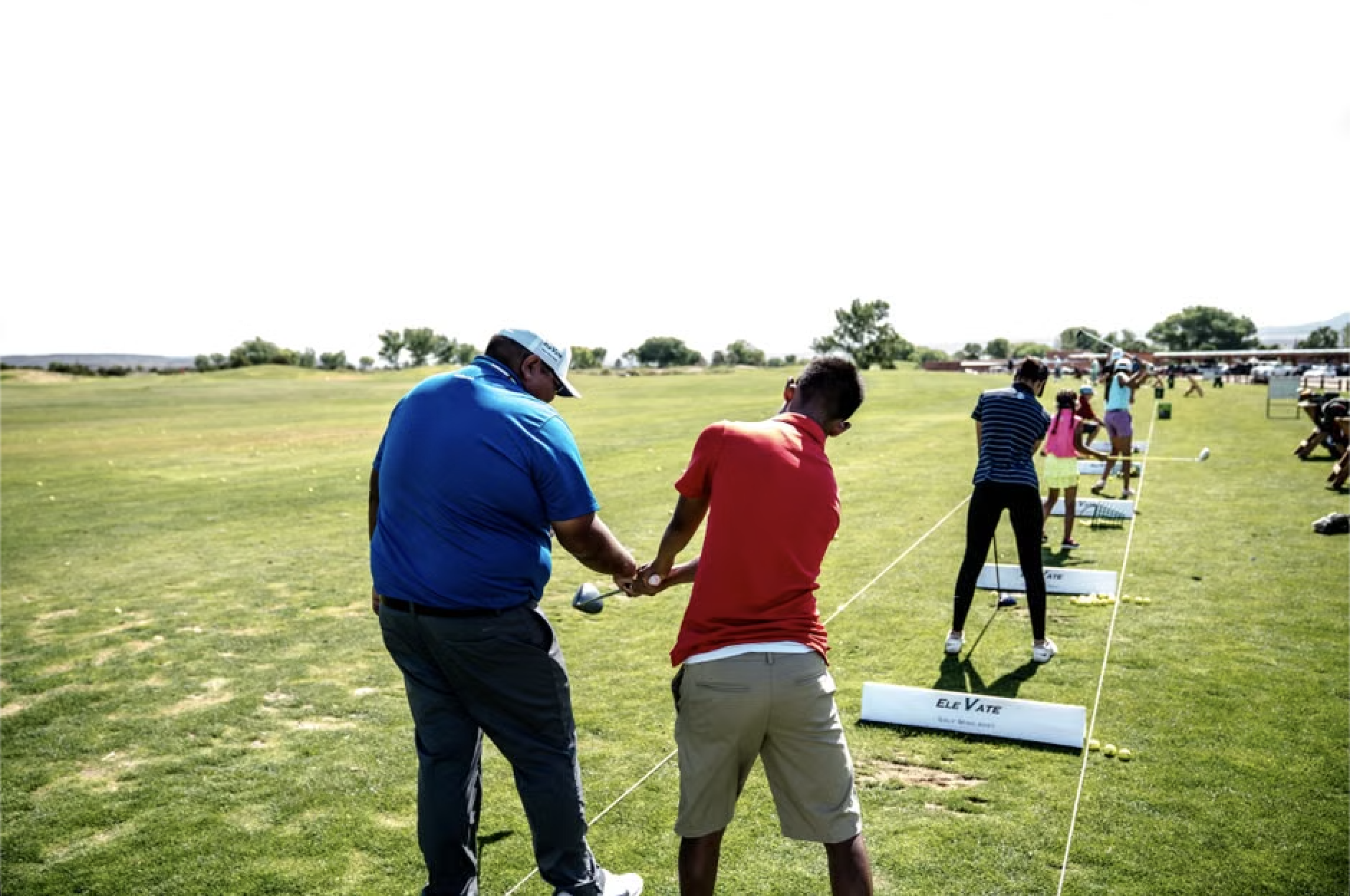
Golf Swing Coach: Experts Share Their Advice
Why a Golf Swing Coach Can Change Your Game
You've been grinding at the range for months, but your scores aren't dropping. Your ball striking feels highly inconsistent, and you're not sure what you're doing wrong. Does this sound like you? At The Golf Forge, we solve this exact frustration by providing 24/7 access to private indoor bays, advanced Foresight Falcon launch monitor data, and professional swing coaches to help you build a repeatable, confident swing.
A golf swing coach is the most direct path from frustration to real, measurable improvement - whether you're a beginner trying to build a foundation or an experienced player stuck at a plateau.
Here's what you need to know quickly:
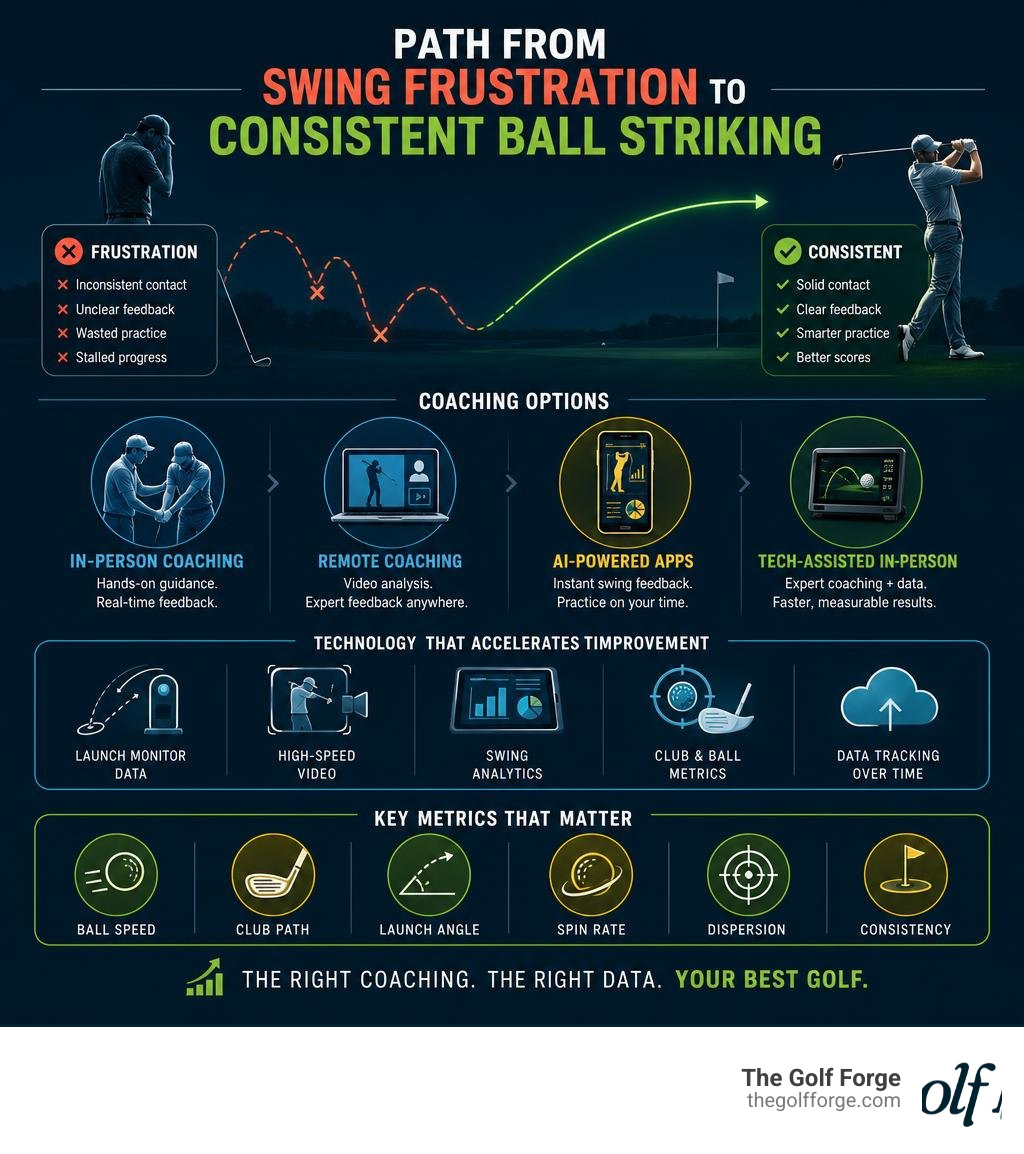
In-person coaching gives you hands-on feedback and real-time corrections from a certified professional
Remote/online coaching connects you with a coach through video analysis on a flexible schedule
AI-powered swing analysis tools can deliver fast swing feedback from your smartphone
Tech-assisted in-person coaching (like utilizing Foresight Falcon launch monitors) combines human expertise with hard data for the fastest results
Cost range: AI swing tools often run roughly $10-$60/month; remote coaching varies by coach; in-person lessons typically start around $95 per session
The problem most golfers face isn't effort - it's environment. Outdoor ranges close in bad weather, and crowded facilities make focused practice nearly impossible. Without accurate data, you're just guessing.
That's exactly why a private, technology-equipped indoor space paired with a skilled swing coach makes all the difference. At The Golf Forge's studios in South Jordan and West Jordan, UT, nothing interrupts your progress.
Below, we break down every coaching option available today, what each costs, and how to choose the right one for your game.
The Evolution of the Golf Swing Coach
For decades, working with a golf swing coach meant standing on a windy, sun-baked grass range while an instructor watched your ball flight and yelled out adjustments. You had to rely purely on "feel" and the coach's naked eye. If you wanted to see your own swing, someone had to pull out a bulky camcorder, record a tape, and play it back on a tiny screen.
Today, the entire landscape of golf instruction has shifted. We have transitioned from subjective guesswork to objective, data-driven science. Modern swing coaching is a blend of human expertise, advanced launch monitor metrics, and artificial intelligence.
This technological leap has completely redefined the golf simulator experience. Instead of guessing why you sliced your driver, you can step into a controlled indoor environment and instantly see your club path, face angle, and body rotation down to the millimeter. Whether you are working with an in-person PGA professional or using an app on your phone, technology has made elite coaching accessible to anyone, anywhere, at any time of day.
The Role of a Professional Golf Swing Coach
Even with the rise of artificial intelligence, a certified human coach remains the gold standard for long-term improvement. A professional coach provides three critical elements that technology alone cannot replicate:
Personalized, Empathetic Feedback: A human coach understands your unique physical limitations, injury history, and personal goals. They don't just see a swing flaw; they understand why your body is moving that way.
Contextual Problem Solving: If you are struggling with a slice, an AI might tell you your clubface is open. A human coach will realize that your open face is actually a compensation for a poor grip or an improper hip turn, fixing the root cause rather than the symptom.
Customized Drills and Real-Time Adjustments: A coach can physically guide your hands into the correct position, offering hands-on adjustments that build muscle memory far faster than visual cues alone.
When you pair a certified golf coach swing expert with a modern simulator environment, your learning curve drops dramatically. You aren't just hitting balls into a net; you are receiving immediate, high-fidelity visual and physical feedback under the watchful eye of an expert.
The Rise of Technology-Assisted Coaching
The biggest breakthrough in modern golf instruction is the fusion of human coaching with computer vision and pose detection. Today's training environments use high-speed cameras to capture your swing from multiple angles, instantly overlaying a digital "skeleton" on your body.
This technology-assisted approach translates your movement into hard data. It measures your shoulder turn, hip sway, head stability, and spine angle throughout the seven phases of the golf swing: address, takeaway, top, transition, impact, release, and finish. Instead of a coach saying, "You're swaying a bit," they can show you on a screen that your hips shifted 2.4 inches too far to the right during your backswing.
This level of visual feedback bridges the gap between what you think you are doing (your feel) and what you are actually doing (your real).
Comparing Coaching Methods: In-Person, Remote, and Tech-Driven
With so many coaching options available in July 2026, finding the right approach depends on your budget, schedule, and learning style. Here is how the three primary coaching methods stack up against each other:
Feature In-Person Coaching (Traditional/Simulator) Remote/Online Coaching AI-Powered Swing Analysis Tools Feedback Speed Real-time, instantaneous Asynchronous (typically 12-48 hours) Instant or near-instant Cost $95-$150+ per hour $50-$150+ per month (subscription) Free to $15-$25/month Accountability High (scheduled appointments) Moderate (regular check-ins) Low (self-motivated) Data Accuracy Elite (uses commercial launch monitors) High (dependent on your video quality) Moderate (dependent on phone camera angle) Best For Hands-on learners, rapid fixes, beginners Busy schedules, structured video feedback Budget-conscious practice, quick range checks
Benefits and Limitations of Remote Online Lessons
Remote coaching has become popular because it gives golfers a way to receive structured feedback without needing to coordinate every practice session around a fixed appointment time.
The concept is simple: you record your swing on your smartphone, upload it through a coaching platform, and send it to your instructor. Your coach then sends back a detailed video analysis, often with voiceover, on-screen drawings, side-by-side comparisons, and tailored drills.
The Benefits:
Asynchronous Learning: You don't have to coordinate busy schedules. You can record your swing at 11:00 PM in a private bay and receive your feedback later.
Flexible Access to Coaching: You can work with a qualified instructor even when your travel, work, or family schedule makes weekly in-person lessons difficult.
Cost-Effectiveness: Remote coaching is often cheaper than weekly in-person lessons, giving you ongoing access to feedback for a flat monthly subscription.
The Limitations:
No Real-Time Correction: If you misunderstand a drill, you might spend a week practicing the wrong movement before your coach can correct you in your next video submission. This is where having a reliable golf simulator solver setup helps, as it allows you to cross-reference your ball flight data with the drill instructions.
Video Quality Dependence: If your phone camera is at the wrong angle or the lighting is poor, your coach won't be able to accurately analyze your swing plane or clubface.
How Modern Swing Analysis Works
To get the most out of remote coaching or AI-powered analysis tools, you must understand how modern swing analysis systems capture and evaluate your movement.
First, proper recording requires two primary camera angles:
Down-the-Line (DTL): The camera is placed directly behind you, aligned with your hands and pointing down the target line. This angle is critical for analyzing your swing plane, club path, and posture.
Face-On (FO): The camera is placed directly in front of you, facing your chest. This angle is essential for evaluating your hip rotation, lateral sway, head stability, and weight shift.
For the most accurate results, place your phone at hand height, roughly 8 to 10 feet away from your setup.
Once your video is captured, modern analysis systems can use pose detection algorithms to evaluate key checkpoints throughout the swing.
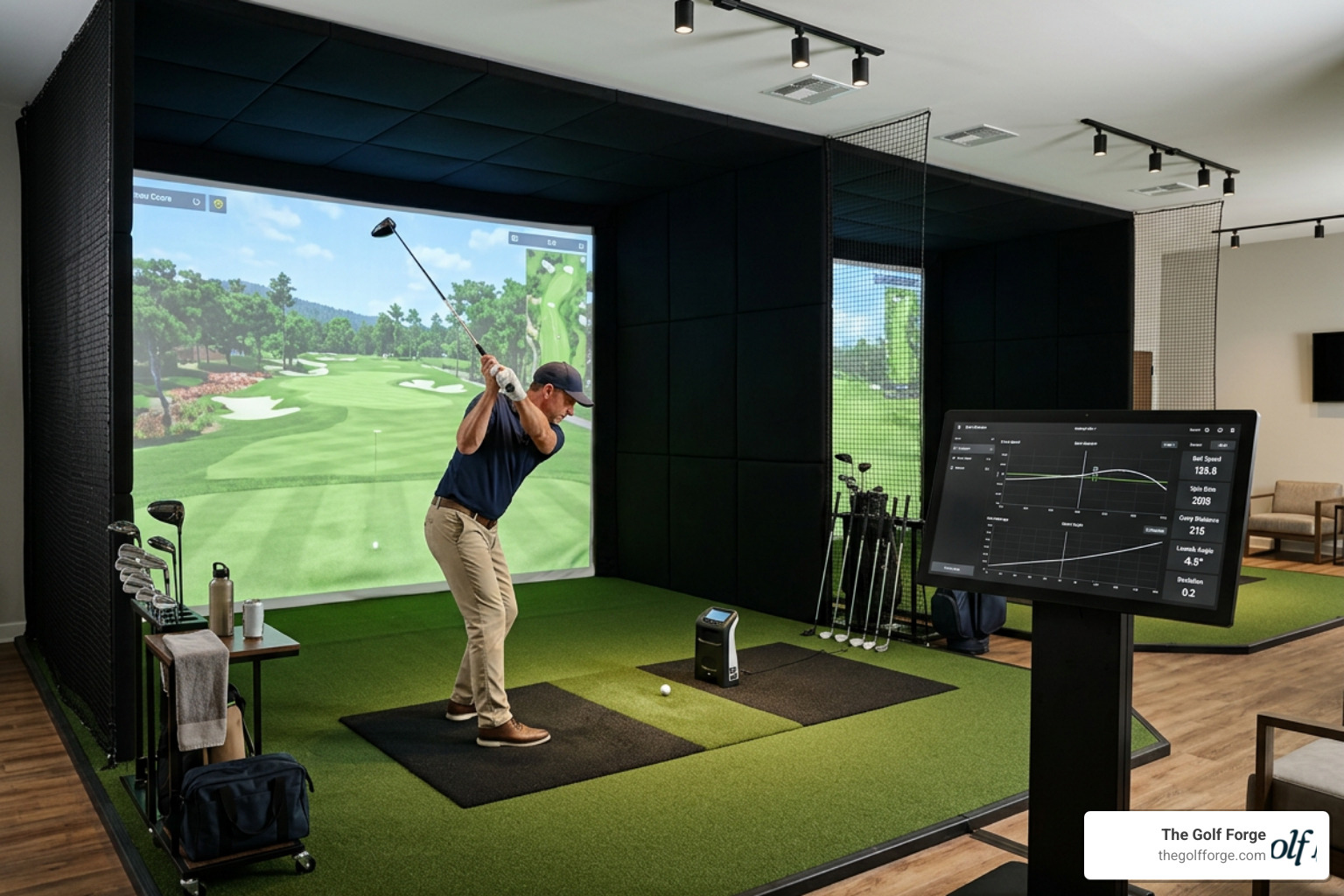
For example, a swing analysis tool might evaluate hip hinge, knee bend, takeaway, shoulder plane, impact posture, and tempo. Some systems also flag common issues such as early extension, casting, or an over-the-top move. The best approach is to avoid information overload and focus on one major fault at a time, then use a high-leverage drill during your next practice session.
The Role of Technology in Modern Swing Instruction
Technology is no longer just an accessory to golf coaching; it is the foundation. When you combine high-speed cameras with a professional golf launch monitor, you remove all subjectivity from your practice. You no longer have to wonder if you hit a shot thin because you lifted your head or because your hips stalled—the data will tell you exactly what happened.
Why Launch Monitor Data is Essential for Swing Changes
When you make a swing change, your "feels" will lie to you. A swing that feels incredibly awkward might actually be technically perfect. This is why having access to instant, objective data is crucial for cementing changes.
Commercial launch monitors, like the Foresight Falcon systems used at The Golf Forge, track critical metrics that dictate the golf simulator outcome of every single shot:
Club Path: Are you swinging out-to-in (causing a slice) or in-to-out (causing a draw)?
Face Angle: Is your clubface open, closed, or square to your path at the exact millisecond of impact?
Launch Angle & Spin Rate: Are you optimizing your launch conditions to maximize distance, or is excessive backspin ballooning your shots?
Ball Speed & Smash Factor: How efficiently are you transferring energy from the clubhead to the ball?
By watching these numbers change in real time, you can immediately validate whether your swing adjustments are producing the desired results.
Indoor vs. Outdoor Practice Environments
While hitting off grass at an outdoor range has its merits, it is a highly inconsistent environment for making technical swing changes. Wind, temperature, poor turf quality, and bad range balls can skew your ball flight, leading you to make bad compensations in your swing.
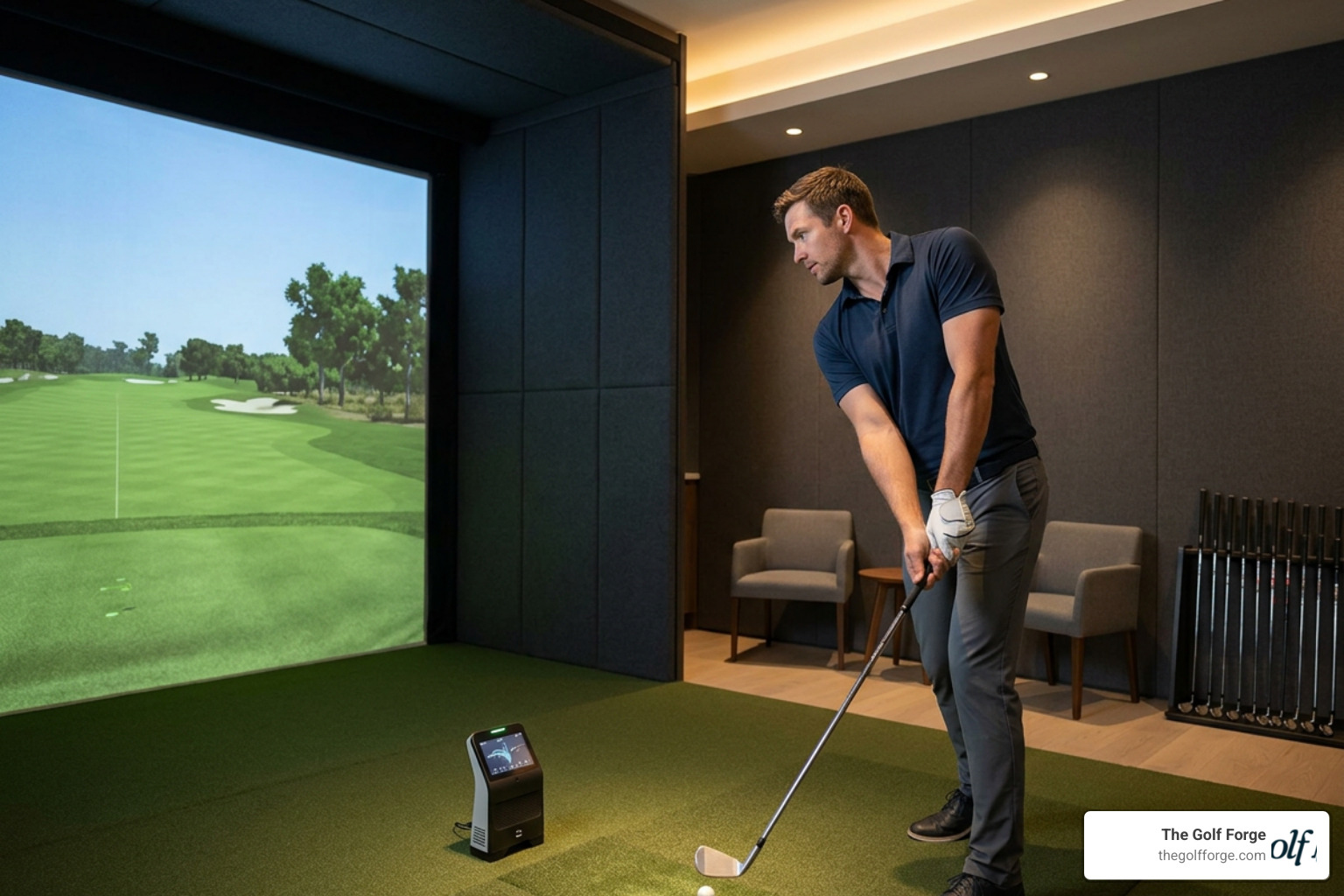
Practicing in a private indoor bay completely changes your golf simulator intention. In a controlled, climate-controlled environment, you can focus entirely on your mechanics without worrying about crosswinds, rain, or freezing Utah winters.
Furthermore, utilizing a premium golf bay rental gives you a private space where you can practice without the self-consciousness of a crowded public range. You can set up your camera, run your drills, and analyze your launch monitor data in complete peace.
How to Choose the Right Coaching Option for Your Skill Level
Your coaching needs will change as your game evolves. Here is how to map your coaching strategy to your current skill level. If you are not sure where you fit, the USGA handicap resources can help you understand how handicap ranges relate to scoring ability and progress tracking.
1. The Beginner (Handicap: 25+ or New to the Game)
Your Needs: Foundational mechanics, proper grip, posture, basic alignment, and establishing a repeatable swing path.
Best Approach: Start with structured, in-person coaching to ensure you don't build bad habits that are incredibly difficult to break later. A private simulator bay is especially helpful because you can learn the basics without weather interruptions, crowded range distractions, or uncertainty about whether the ball flight was affected by wind or poor range balls.
Avoid: Relying solely on complex AI tools. Without a basic understanding of golf physics, you may struggle to interpret the metrics.
2. The Intermediate (Handicap: 12-24)
Your Needs: Eliminating a major miss (like a slice or hook), improving ball-striking consistency, and fine-tuning tempo.
Best Approach: A hybrid model. Use video review or basic swing-analysis tools for quick feedback during your weekly practice sessions. Combine this with regular coach check-ins or monthly in-person simulator sessions to keep your progress on track.
Local Resource: At The Golf Forge, intermediate players can use private bays and Foresight Falcon launch monitor data to identify whether their miss is coming from club path, face angle, strike location, launch conditions, or tempo.
3. The Advanced Player (Handicap: <11)
Your Needs: Micro-adjustments, spin control, clubface angle optimization at impact, and course management.
Best Approach: Deep, data-driven practice. Advanced players benefit most from high-end launch monitor analysis (like Foresight Falcon data) in a private bay. Pair this with structured coaching focused on shot shaping, dispersion control, wedge distance windows, and measurable performance goals.
Frequently Asked Questions about Golf Swing Coaching
How much do golf swing lessons typically cost?
In-person golf lessons in Utah generally range from $95 to $150+ per hour, depending on the coach's credentials and the technology used at the facility. Package deals (such as 5 or 10-lesson bundles) can bring the hourly rate down slightly.
While individual lessons are highly valuable, they can become incredibly expensive if you need ongoing support. That is why many serious golfers opt for a membership model at an indoor simulator facility. For less than the cost of a couple of traditional lessons, a monthly simulator membership gives you unlimited, year-round access to the high-tech tools and data you need to coach yourself or work seamlessly with a remote instructor.
Can beginners use technology-assisted coaching effectively?
Yes! In fact, beginners often benefit the most from technology because they have no pre-existing "feel" for the swing.
Using visual feedback—like seeing your swing path displayed on a simulator screen—prevents you from developing bad habits. Rather than guessing if you kept your lead arm straight, you can look at the screen and see the proof instantly. The key for beginners is to focus on simple, foundational metrics (like club path and face-to-path relationship) rather than getting bogged down in complex spin axis or launch angle numbers.
How often should I see a coach or analyze my swing?
A good rule of thumb is the 4:1 practice-to-lesson ratio. For every hour you spend with a coach (or analyzing your swing on an app), you should spend at least four hours practicing those specific changes on your own.
Your brain needs time and repetition to build new neural pathways and muscle memory. If you get a new lesson or run a deep swing analysis every single time you hit the range, you will suffer from "paralysis by analysis." Give your body time to absorb a change before introducing the next adjustment.
Conclusion: Take Charge of Your Game
Improving your golf swing doesn't have to be a frustrating game of trial and error. Whether you choose the hands-on guidance of an in-person PGA professional, the flexible schedule of a remote coach on Skillest, or the instant, on-demand feedback of an AI swing app, the key to faster improvement is combining expert advice with consistent, data-driven practice.
At The Golf Forge, we provide the ultimate environment to make those swing changes stick. Our state-of-the-art indoor simulator studios in South Jordan, UT and West Jordan, UT offer:
24/7 Private Bays: Practice on your schedule, day or night, completely free from distractions or weather interruptions.
Foresight Falcon Launch Monitors: Get the exact, tour-level data you and your coach need to measure your progress.
Flexible Memberships: Choose from our Bronze, Silver, Gold, or Corporate membership tiers to fit your lifestyle and practice habits.
Corporate Perks: Treat your team, entertain clients, or enjoy executive wellness benefits with our premium corporate access.
Stop guessing what is wrong with your swing. Start fixing it with the best technology and coaches in Utah.
Ready to start your journey? Explore our services to see how we help players of all levels.
Want to book your private bay today? Book your session now.
Looking for professional guidance? Get started with a Golf Swing Coach at our premier indoor facility.