
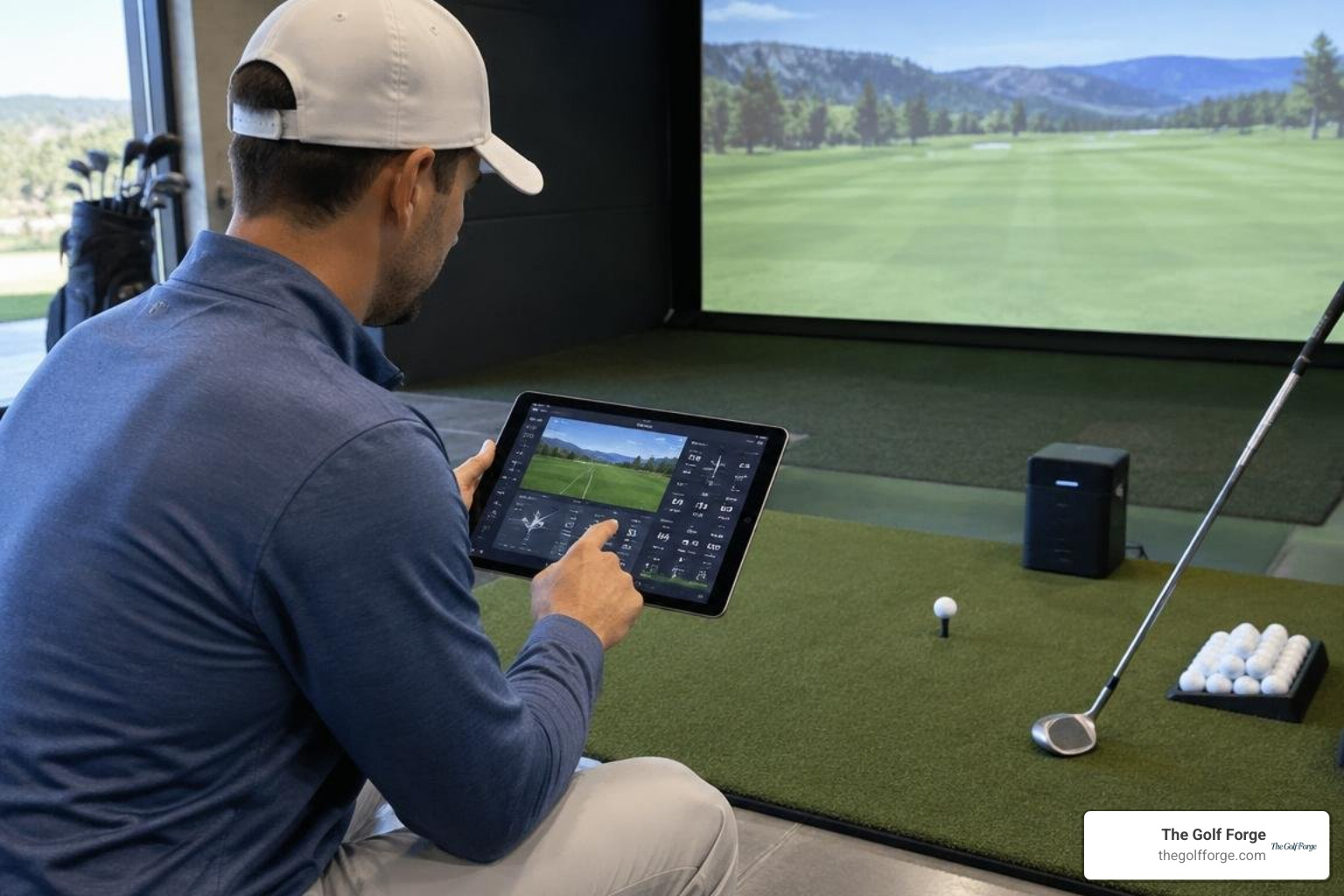
Transform Your Swing Mechanics Through a Modern Golf Coaching Program
Find a Golf Coaching Program That Builds a More Reliable Swing
Your swing feels great one day and unpredictable the next. Bad weather and a busy schedule can make steady practice even harder.
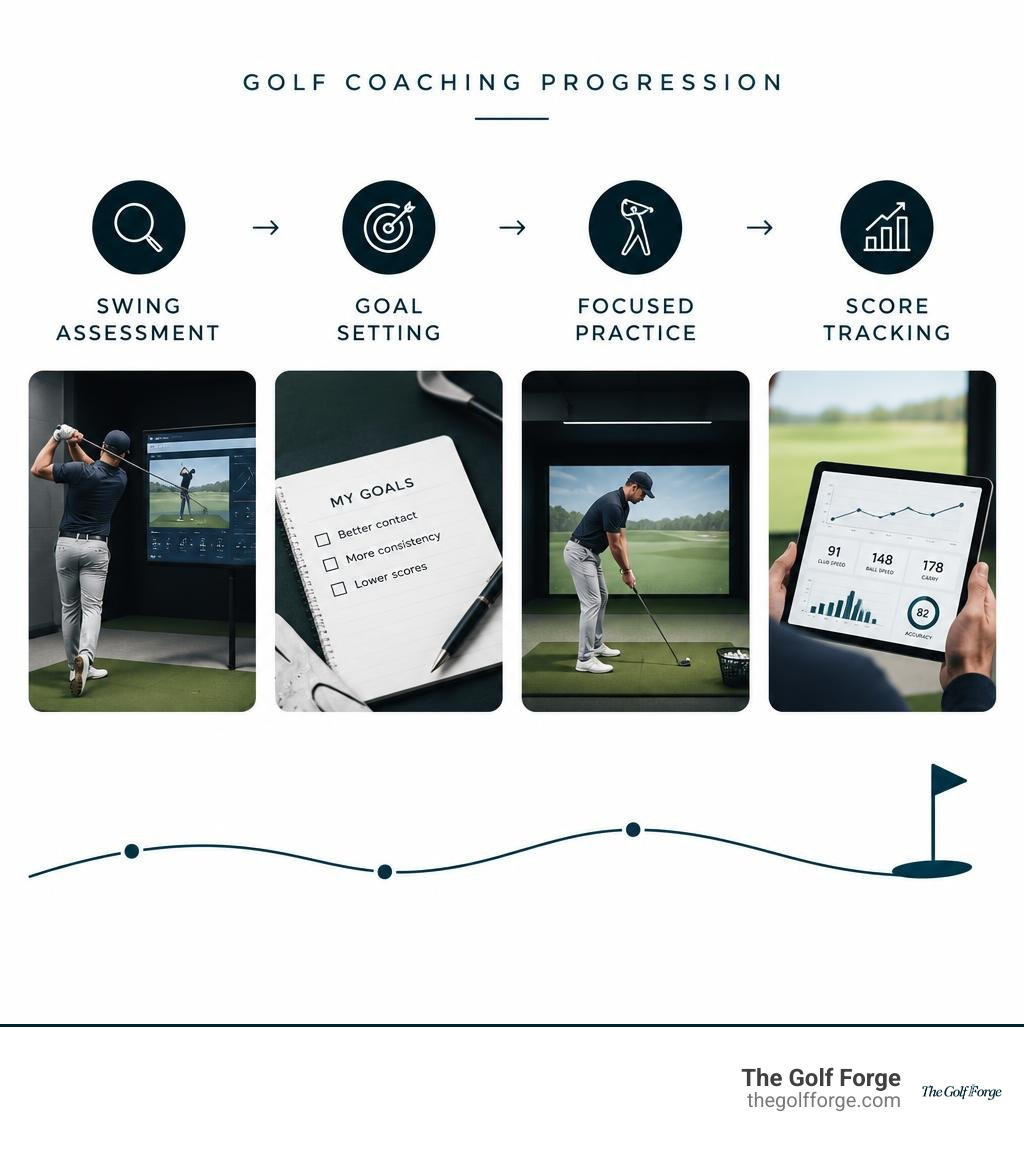
A golf coaching program should give you a clear plan: assess your swing, set a goal, practice specific changes, and check your progress over time. Look for a program that fits your skill level and includes feedback you can use between lessons. At The Golf Forge, 24/7 private bays in South Jordan and West Jordan give you a consistent place to practice, with Foresight launch-monitor data to help you track each session.
Core Components of an Elite Golf Coaching Program
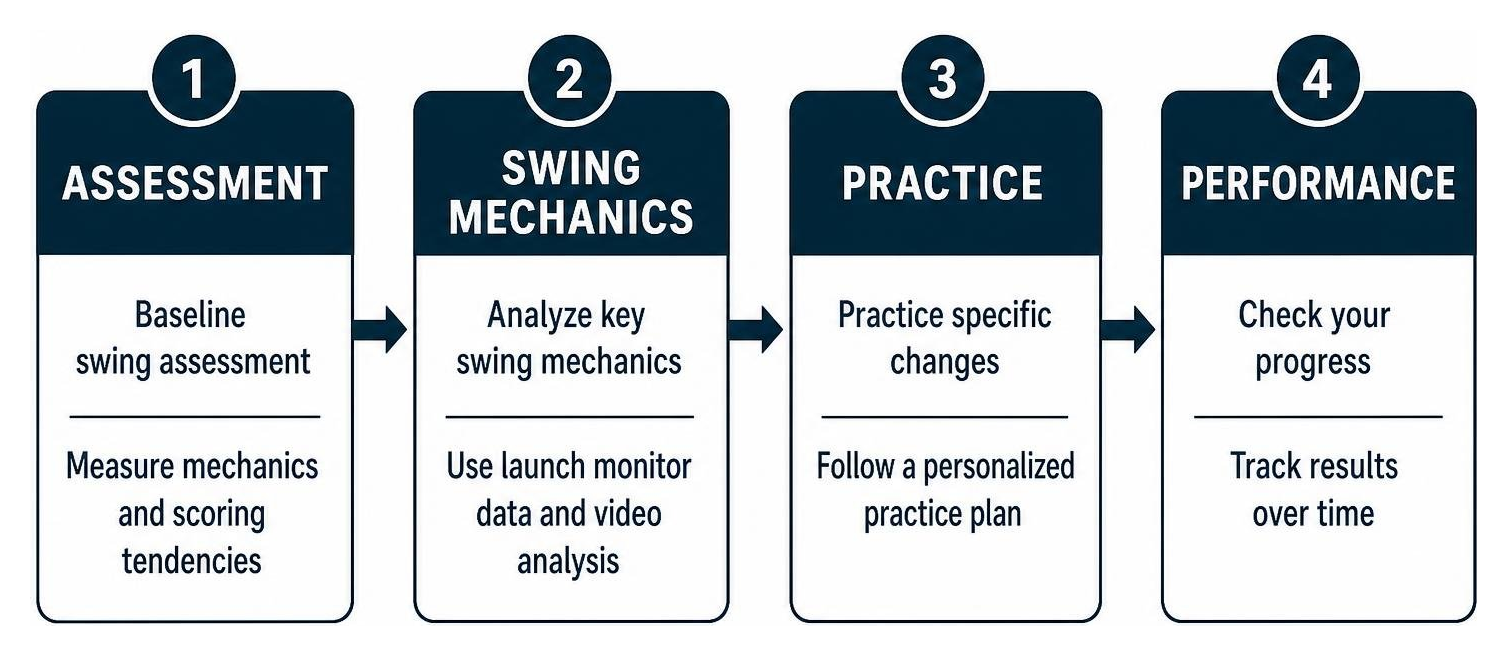
An elite training framework goes far beyond simply hitting a bucket of balls and hoping for lightning to strike twice. The foundation of real, lasting golf swing improvement is a systematic curriculum. Rather than offering band-aid adjustments on the range, modern instruction starts with a diagnostic baseline assessment to measure physical movement patterns, club delivery, and scoring tendencies.
From this initial audit, an experienced swing coach creates a personalized practice plan. This roadmap pairs progressive skill building with high-speed video analysis and objective measurement. Instead of guessing whether you cleared your hips or shifted your weight, you receive side-by-side visual breakdowns that prove whether your movement patterns are evolving.
Swing Mechanics and Launch Monitor Data Analysis
Understanding your ball flight starts with the laws of physics. Every slice, hook, push, or pull comes down to measurable factors: clubhead path, face angle relative to that path, angle of attack, strike location, and clubhead speed.
Through precise golf swing plane analysis, instructors can pinpoint exactly where mechanical breakdowns occur throughout your kinetic chain. By tracking these variables alongside golf swing tempo training, golfers learn to time their transition smoothly and deliver the clubface square to the target line. Instant data feedback takes the mystery out of ball striking, letting you see the immediate correlation between your body mechanics and ball flight numbers.
Course Management and Mental Game Integration
Great golf is not played on a mechanical grid alone; it requires sound decision-making and emotional poise under pressure. Advanced instruction integrates strategic course management and sports psychology into technical practice. Golfers learn to calculate realistic dispersion patterns instead of aiming directly at tucked pins, minimizing double bogeys and eliminating compounding errors.
For competitive players, cultivating resilience is just as critical as honing backswing depth. Structured mental conditioning curricula provide concrete pre-shot routines, visualization drills, and emotional regulation techniques to help junior, collegiate, and adult golfers excel when tournament pressure peaks.
Comparing Golf Coaching Formats: In-Person, Simulator-Based, and Virtual
Finding the right format depends on your schedule, budget, learning style, and access to quality training environments.
Coaching Format | Delivery Method | Time Commitment | Technology Integration | Primary Benefit |
|---|---|---|---|---|
Traditional Private Lessons | In-person at outdoor range or club | 30–60 mins weekly or bi-weekly | Basic video capture; varied tech | Direct tactile feedback from an instructor |
Indoor Simulator Studio | Private climate-controlled hitting bay | Flexible; 1–3 hours weekly (24/7) | Foresight launch monitors & high-speed cameras | Pinpoint club delivery metrics and zero weather delays |
Virtual / App-Based Coaching | Asynchronous video exchange (dedicated video platforms) | 15–45 mins review per week | Mobile apps and screen markup | High flexibility for busy schedules |
Immersive Multi-Month Programs | Hybrid: 1-on-1 sessions, strategy, and play | 3–6 months structured progression | Comprehensive multi-angle data & video recaps | Total transformation across technique, mental game, and scoring |
Traditional Grass Ranges vs. Year-Round Indoor Golf Studios
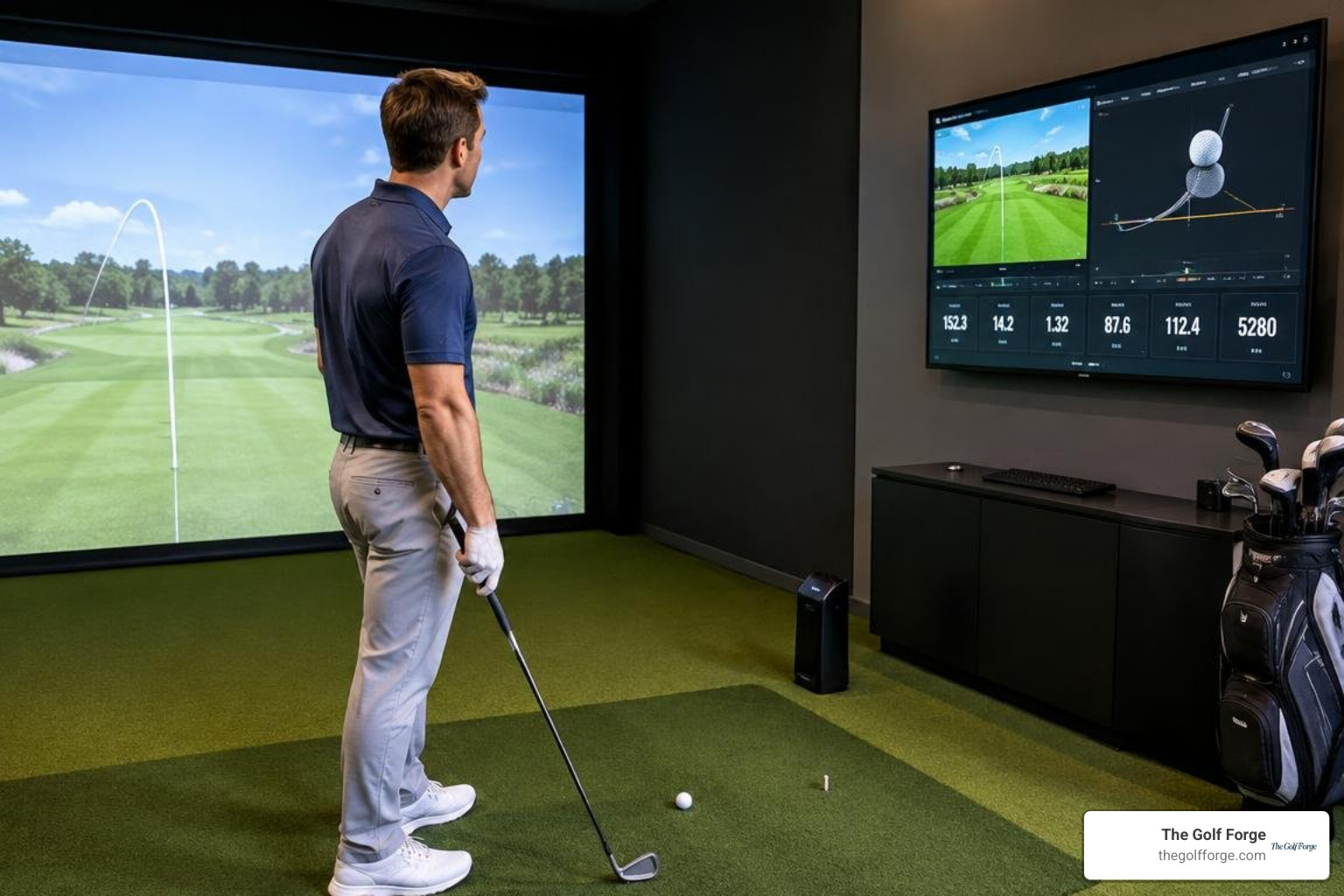
While grass driving ranges have been the default for generations, outdoor practice comes with unpredictable variables: gusting winds, uneven turf, poor lighting, and seasonal weather shutdowns. During Utah winters or scorching mid-summer afternoons, practicing outside often leads to compromised repetitions and stalled momentum.
Engaging in dedicated indoor golf training eliminates external variables so you can focus entirely on mechanical execution. Modern golf simulator practice within an upscale golf studio utilizes overhead Foresight Falcon launch monitors and high-speed cameras to capture ball speed, spin rates, launch angles, and exact impact locations on every strike. Having 24/7 access to climate-controlled bays ensures your training never pauses, providing the steady repetition required for true muscle memory.
Choosing the Right Golf Coaching Program for Your Skill Level
Selecting an effective framework requires matching instruction to your current stage of development:
Beginners: Need foundational grip, posture, alignment, and basic ball-striking concepts delivered through supportive, step-by-step coaching.
Mid-Handicappers: Benefit from breaking through scoring plateaus by identifying persistent swing faults, improving proximity to the hole with mid-irons, and refining short-game touch.
Low-Handicappers & Competitive Players: Require comprehensive golf performance coaching focused on fine-tuning clubhead delivery, optimizing launch conditions, tightening shot dispersion, and mastering tournament strategy.
Instructor Certifications and Coaching Methodologies
The quality of instruction directly impacts how efficiently you progress. Reputable coaching programs are anchored by instructors holding credentials from recognized governing bodies such as the United States Golf Teachers Federation (USGTF) or the PGA of America.
Established in 1989, the USGTF is the largest national organization of certified golf teaching professionals worldwide, with its Golf Teaching Pro publication reaching over 35,000 readers per issue. Certification pathways require coaches to master full-swing kinematics, fault identification, short-game execution, club fitting, and golf psychology. Additionally, the PGA of America Debuts Player Engagement Pathway for PGA Professionals to Target Golfers of all backgrounds, ensuring instructors follow structured, standardized roadmaps for player development.
Professional Certification Pathways and Youth Coaching Standards
Youth development requires an entirely different instructional approach than adult coaching. Leading organizations, such as the U.S. Kids Golf Institute—which has trained over 7,000 coaches across more than 80 countries since 2012—focus on games-based learning and clear developmental checkpoints:
Putting Mastery: Fundamentals of distance control, green reading, and setup alignment.
Around the Green: Developing chipping, pitching, and bunker confidence.
Full Swing Fundamentals: Establishing solid swing mechanics using properly fitted, lightweight equipment.
Scoring Strategy: Translating practice drills into on-course decision-making.
Rules & Etiquette: Fostering sportsmanship, pace of play, and respect for the game.
Engaging parents throughout this pathway creates a positive learning environment, ensuring young golfers develop both skill and a lifelong passion for the sport.
What to Expect from High-Performance Academy Frameworks
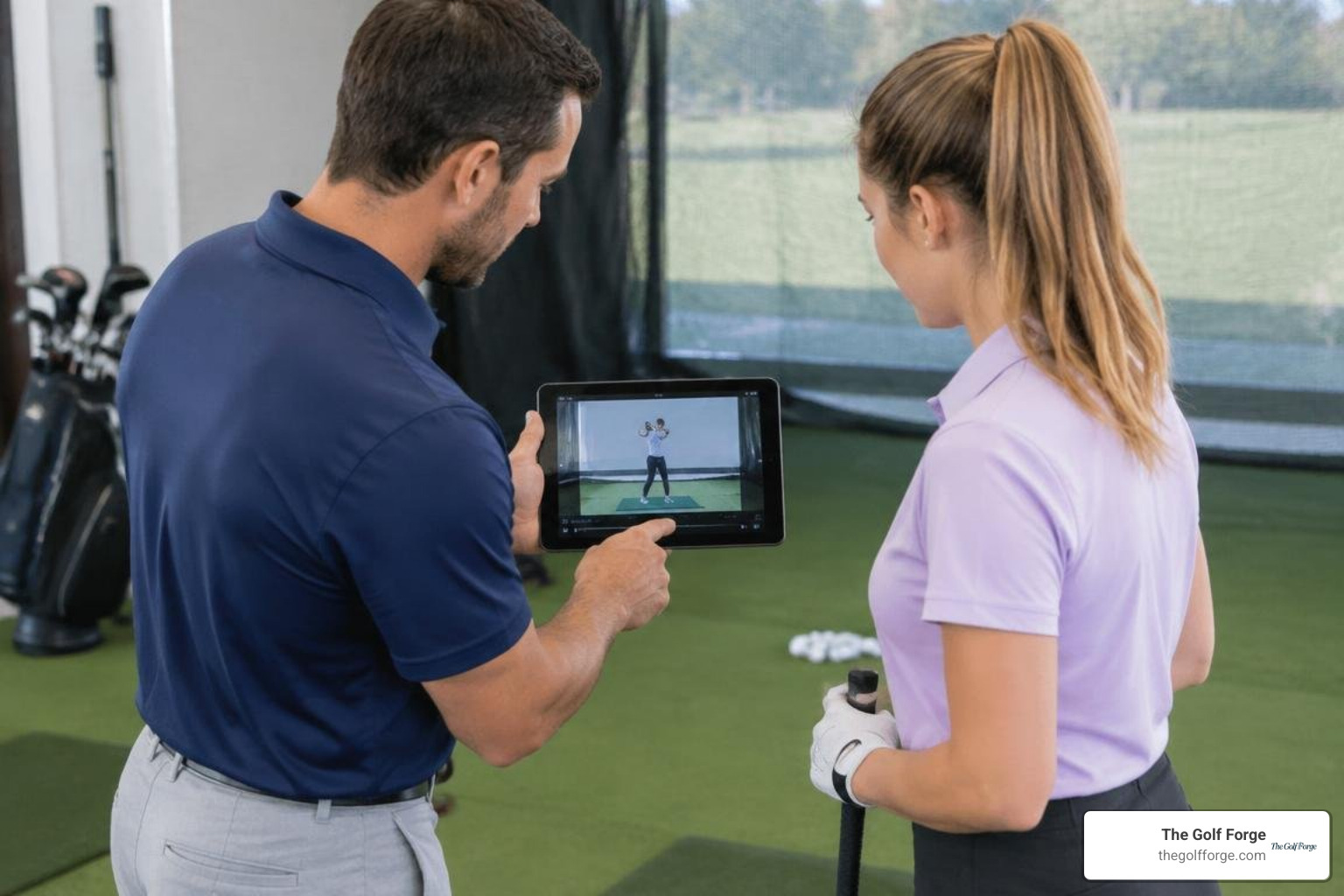
High-performance programs take an immersive approach to player development. Rather than offering isolated tips, a comprehensive audit evaluates your physical capabilities, equipment specifications, and mental approach. Working alongside an instructor who analyzes your golf coach swing mechanics ensures every movement is tailored to your body's natural anatomy.
Elite frameworks also blend technical bay sessions with on-course playing lessons, teaching you how to handle uneven lies, variable wind conditions, and pressure situations while validating your progress through precise club fitting and structured practice plans.
Program Commitments, Pricing Models, and Measuring Real Progress
Investment levels for structured instruction vary based on duration, coaching credentials, and technological resources. As outlined in our comprehensive golf swing coach guide 2026, golfers can choose from several pricing structures:
Single Standalone Lessons: Typically range from $75 to $200 per hour for basic mechanical check-ups.
Targeted Multi-Week Mental Packages: Structured 6-to-12-week virtual mental conditioning packages, such as remote mindset intensives, generally range from $697 to $1,597.
Comprehensive Multi-Month Academies: High-touch programs with capped enrollment provide weekly private coaching, video recaps, and playing strategy sessions for a premium monthly investment.
Structuring a 90-Day Golf Coaching Program for Fast Results
A three-month roadmap offers the optimal balance for building lasting habits and reinforcing mechanical adjustments without feeling overwhelmed:
Month 1 (Diagnostic & Foundation): Comprehensive baseline data capture, swing plane correction, grip/posture calibration, and initial video benchmarking.
Month 2 (Kinetic Sequencing & Speed): Dynamic weight-shift drills, tempo calibration, launch optimization, and supervised practice blocks.
Month 3 (Scoring Integration & On-Course Transfer): Wedge distance matrix creation, dispersion control, course strategy implementation, and milestone evaluation.
Tracking Measurable Benchmarks and Handicap Reductions
Subjective feelings can be deceptive; verifiable data tells the true story of your progress. Effective programs measure concrete metrics over time, including:
Handicap Index: Tracking verified score reductions over 10 to 20 recorded rounds.
Greens in Regulation (GIR): Measuring ball-striking consistency and iron accuracy.
Strokes Gained: Evaluating driving distance, approach proximity, and short-game efficiency against benchmark skill levels.
Launch Monitor Baselines: Documenting tighter smash factor ratings, consistent attack angles, and narrowed shot dispersion patterns.
Real-world results show the power of structured training: golfers committing to dedicated multi-month programs routinely see their handicap drop significantly—such as moving from a 17.0 index down to single digits within a single season—by pairing expert instruction with data-backed practice.
Frequently Asked Questions About Golf Coaching Programs
How long does it take to see results from a structured coaching program?
While immediate mechanical improvements and cleaner contact can occur during your very first session, ingraining new movement patterns typically takes 4 to 12 weeks of consistent, deliberate practice. Combining weekly instruction with 2 to 3 data-driven practice sessions per week accelerates this consolidation window significantly.
What is the difference between single golf lessons and a comprehensive coaching program?
A single lesson generally targets an isolated symptom (such as an immediate slice or shank) with a quick tip. A comprehensive coaching program provides an end-to-end curriculum: diagnosing root-cause movement faults, establishing measurable benchmarks, integrating mental and course management skills, and holding you accountable across multiple months of development.
Can virtual or simulator-based coaching replace on-course instruction?
Virtual and simulator training excel at refining swing mechanics, club delivery, and ball-flight parameters because they eliminate environmental variables and provide instant launch data. While on-course instruction remains valuable for learning green reading and uneven lies, pairing simulator data analysis with dedicated practice creates the fastest path to mechanical consistency.
Conclusion
Elevating your golf game requires moving past random tips and committing to structured, objective improvement. When you combine professional instruction, sound mental strategies, and reliable launch-monitor feedback, mechanical breakthroughs naturally translate to lower scores on the course.
Whether you are looking to build a repeatable swing from scratch or break into single-digit territory, pairing expert guidance with consistent, year-round practice is the key to lasting success. Explore our complete range of instructional services, learn more about our training philosophy, and check out flexible membership options—including Bronze, Silver, Gold, and Corporate packages—to start your journey. Contact our team today to schedule time with a swing coach and lock in your 24/7 private-bay practice sessions at The Golf Forge in South Jordan and West Jordan, Utah.