

Build a Repeatable Motion with Professional Golf Swing Lessons
Build a Repeatable Swing with Golf Swing Lessons
Your swing feels solid one day and unpredictable the next. Bad weather and a busy schedule can make steady practice tough.
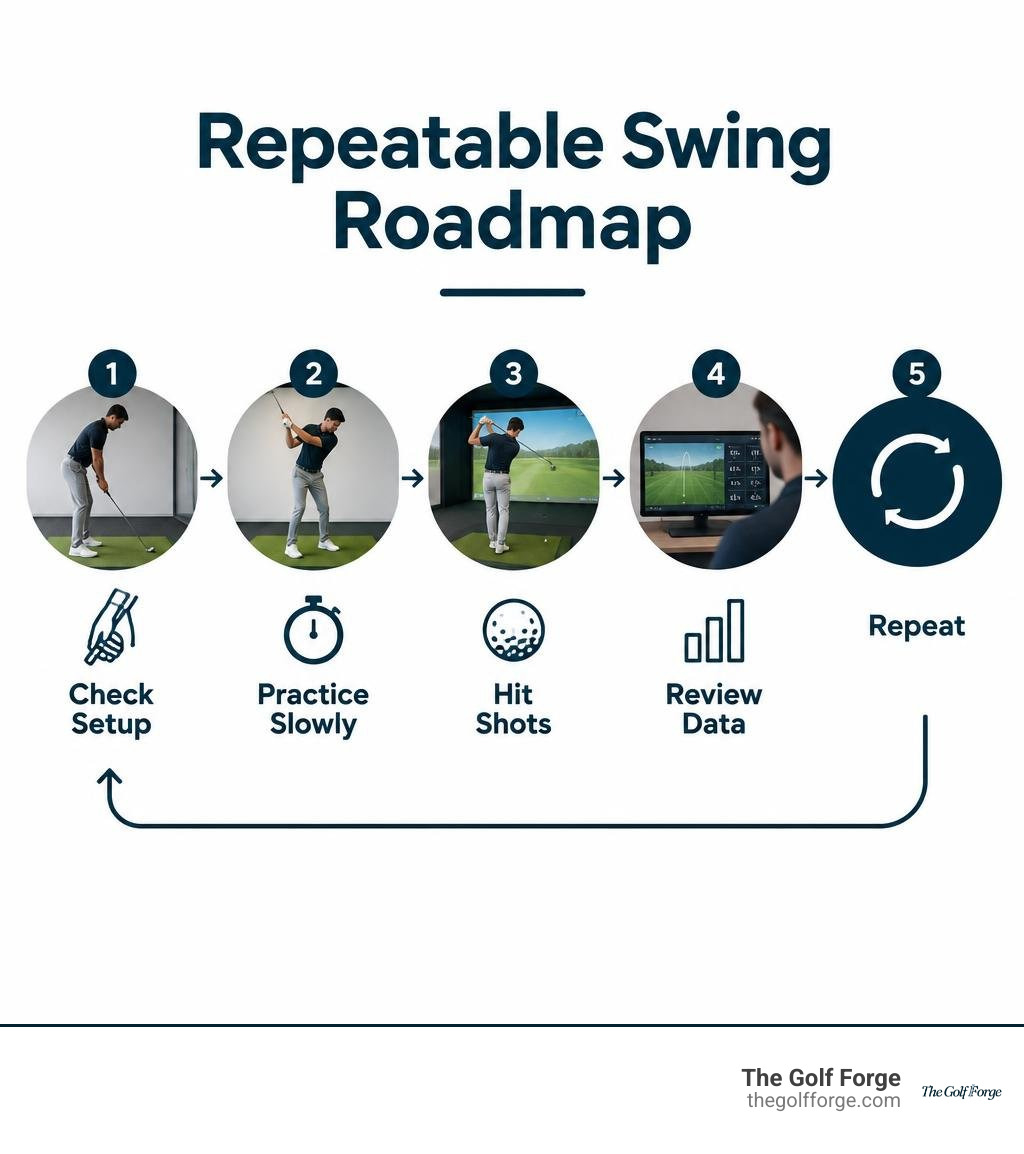
Effective golf swing lessons focus on one change at a time. Check your grip and setup, practice the move slowly, then hit balls and review the results before making another adjustment. Repeat that cycle to build a motion you can trust.
At The Golf Forge, private 24/7 bays in South Jordan and West Jordan let you practice on your schedule. Foresight launch-monitor data helps you see whether each change improves your shots.
Choosing the Right Golf Swing Lessons for Every Skill Level
Finding the right instruction begins with an honest look at your current game and goals. Certified instructors typically start with a comprehensive skill assessment or questionnaire to identify your baseline mechanics, physical capabilities, and specific objectives—whether that is breaking 90, curing an over-the-top slice, or gaining clubhead speed.
Golfers can make more consistent progress when they find instruction that matches their current skills, physical capabilities, and goals. A systematic review of golf swing biomechanics examines how body and club movements contribute to performance. Pairing that feedback with a lesson plan helps golfers focus practice on the change their instructor has prioritized. At The Golf Forge, private 24/7 bays provide a practical place to repeat those priorities between lessons and compare results with launch-monitor data. This repeatable practice routine can make each lesson more useful over time.
Building Fundamentals with Private Golf Swing Lessons
Private instruction gives novice golfers a focused way to build the core fundamentals:
A neutral, comfortable grip
Proper athletic posture and stance width
Basic alignment and ball position
Foundational clubface awareness
Private sessions give golfers one-on-one feedback, helping them address individual movement limitations and practice specific corrections before habits become harder to change.
Personalized Coaching for Intermediate and Advanced Players
For experienced golfers, breaking through a scoring plateau requires precise diagnostic tools rather than generic advice. Working with a dedicated golf coach helps intermediate and low-handicap players identify subtle breakdowns in the kinetic chain.
Personalized coaching shifts focus toward high-level ball striking:
Club delivery dynamics (face angle relative to path, angle of attack, dynamic loft).
Advanced course management and risk-reward strategies.
Distance control with scoring wedges.
Targeted routines for structured golf swing improvement.
Core Swing Mechanics: Loading, Arm Speed, and Path Control

A repeatable golf swing depends on a sound sequence of movements: stabilizing the lower body, coiling the torso, and releasing the club along a functional plane.
Loading vs. Swaying: Storing Energy in the Trail Side
A common fault that ruins ball striking is swaying—sliding the hips laterally away from the target during the backswing instead of rotating. Swaying shifts your center of gravity too far backward, forcing compensations on the downswing that cause fat shots and thin strikes.
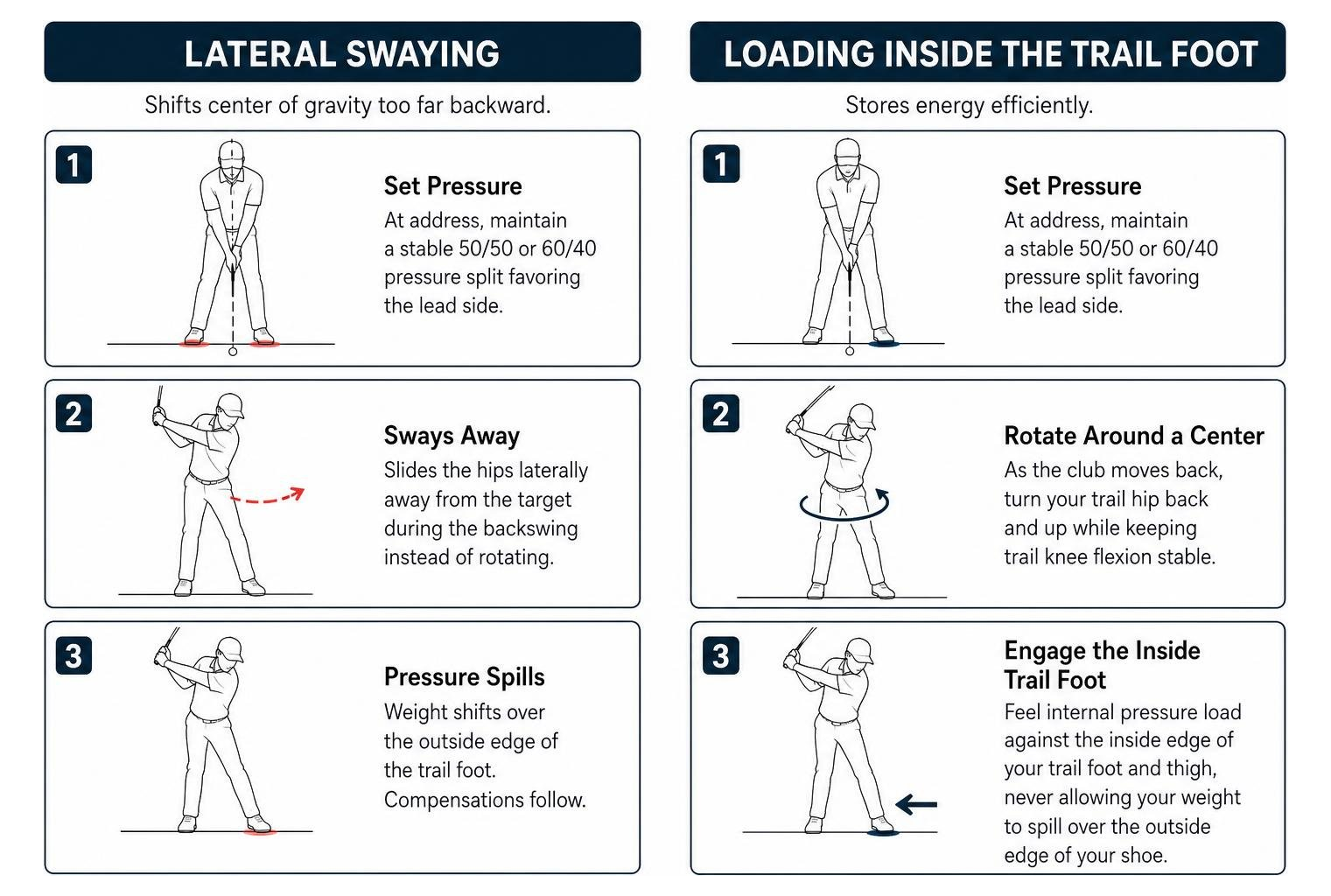
Loading, by contrast, stores energy efficiently:
Set Pressure: At address, maintain a stable 50/50 or 60/40 pressure split favoring the lead side.
Rotate Around a Center: As the club moves back, turn your trail hip back and up while keeping trail knee flexion stable.
Engage the Inside Trail Foot: Feel internal pressure load against the inside edge of your trail foot and thigh, never allowing your weight to spill over the outside edge of your shoe.
Vertical Swing Plane and Arm-Driven Power
Proper swing plane control determines whether your club strikes the ball square or glances across it. When analyzing your swing plane, many golfers find they pull the club excessively inside, getting stuck behind the body.
Maintaining a more upright, vertical path with the lead arm helps create a wider swing arc. For players with limited hip rotation, utilizing the arms as a primary driver of levered speed generates substantial clubhead velocity without over-torquing the lower back.
Step-by-Step Practice Drills to Build Muscle Memory
Deliberate practice with real-time feedback bridges the gap between understanding a swing concept and executing it naturally under pressure.
Feet-Together and Lead-Arm Drills for Dynamic Balance

Dynamic balance drills eliminate erratic body movement and isolate pure arm speed:
The Feet-Together Drill: Set up with your feet touching and hit smooth 7-iron shots. If you sway or lunge, you will instantly lose your balance. This drill forces you to rotate around your spine and sync your arm swing with your body.
The Vertical Lead-Arm Drill: From your setup, lift the club straight up in front of your chest with your lead arm, then rotate your shoulders 90 degrees. This trains the feeling of a wide backswing without letting the hands drift behind your torso.
Enhancing Golf Swing Lessons with Slow-Motion Video and Mirror Drills
Human perception during a full-speed swing (which takes around 1.2 seconds) is often inaccurate—what you feel rarely matches what is real.
Using slow-motion video captures high-frame-rate footage that reveals early extension, over-rotation, or an open clubface. Combining mirror work with golf swing tempo training allows you to pause at key checkpoints (takeaway, top of backswing, delivery position) to reinforce proper joint alignment before picking up speed.
Senior Golfer Adjustments for Maximum Distance and Accuracy
As flexibility naturally changes over time, attempting to swing like a tour player half your age often leads to inconsistent contact and joint discomfort. Modifying fundamentals allows experienced players to retain high clubhead speed effortlessly.
Setup Adjustments: Toe Flare and the Knee-Touch Finish
Simple mechanical adjustments free up restricted joints:
Toe Flare: Flare both feet outward 15 to 30 degrees at address. Flaring the trail foot accommodates a deeper hip turn on the backswing, while flaring the lead foot clears the hips smoothly through impact.
Knee-Touch Finish: Commit to finishing your swing with your trail knee tapping or touching your lead knee. This visual cue guarantees that your weight has fully shifted onto your lead heel, avoiding hang-back hooks and weak pushes.
Practice Feedback for Senior Golfers
For senior golfers, regular practice with Foresight launch-monitor data can help identify launch, strike, and speed patterns worth discussing with a swing coach.
A coach can use those practice results to help golfers refine their setup and swing motion for more reliable contact. Reviewing ball flight, strike location, and club-delivery patterns after a practice session gives golfers a clearer starting point for the next drill. That keeps practice focused on the specific movement the coach has prioritized rather than trying several changes at once. It also lets golfers compare results across sessions while practicing year-round in a private bay.
Integrating Digital Tools and Year-Round Simulator Training
Golfers now combine in-person coaching with digital tools for complete skill development. Private indoor practice bays and launch-monitor feedback give golfers a practical way to reinforce coaching between sessions.
Data-Driven Feedback with High-Speed Launch Monitors
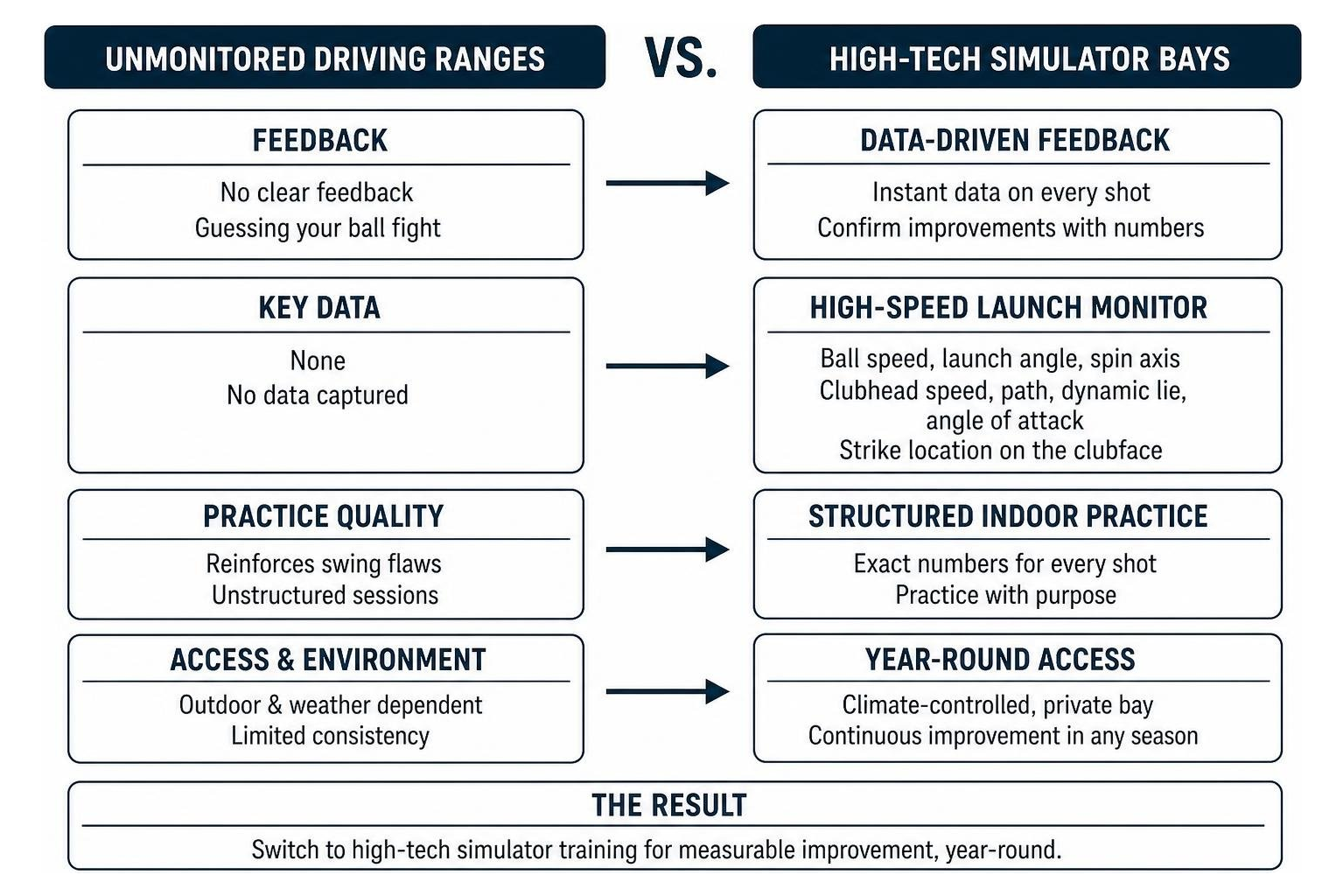
Guessing your ball flight is a thing of the past. Utilizing a high-resolution golf launch monitor equipped with Foresight Falcon technology provides instantaneous data on:
Ball speed, launch angle, and spin axis
Clubhead speed, path, dynamic lie, and angle of attack
Precise strike location on the clubface
This hard data removes guesswork, allowing you to confirm whether a feel-change produces a measurable improvement in delivery during modern indoor golf training.
Structured Indoor Practice vs. Unmonitored Range Sessions
Hitting dozens of balls into an open field without clear feedback often reinforces swing flaws. By switching to dedicated golf simulator practice, you practice in a climate-controlled, private bay with exact numbers for every single shot. Whether it's winter snow or summer heat in Utah, year-round access ensures continuous improvement without weather disruptions.
Frequently Asked Questions About Golf Swing Lessons
How many golf swing lessons does a beginner need before playing a round?
Most beginners benefit from 4 to 6 structured lessons covering grip, posture, basic full-swing mechanics, and short-game fundamentals (chipping and putting). Practicing between lessons helps you feel comfortable navigating an executive or 9-hole course.
What is the fastest way to stop swaying off the ball during the backswing?
Focus on feeling internal pressure build along the inside edge of your trail foot and heel rather than the outside rim. Practicing the feet-together drill or placing an alignment stick outside your trail hip will immediately alert you if your hips slide sideways.
How can senior golfers regain lost swing speed without straining their joints?
Flare your feet 20 to 30 degrees at setup to unlock hip mobility, shift to lighter shaft flexes, and use an arm-driven vertical swing plane rather than forcing an extreme torso twist.
Conclusion
A repeatable, powerful swing is built through deliberate mechanics, accurate feedback, and dedicated practice. Whether you are fine-tuning your ball-striking or learning the basics, structured guidance accelerates your progress and keeps the game enjoyable.
Ready to take your game to the next level? Book a session with an experienced certified swing coach at The Golf Forge. With 24/7 private bay access and advanced Foresight launch-monitor technology in South Jordan and West Jordan, you can practice comfortably on your schedule. Choose from our flexible Bronze, Silver, Gold, or Corporate membership tiers and start building a swing you can rely on all year long.